In 2026, SEO is no longer about guessing what competitors are doing. With AI-powered tools, you can analyze competitor strategies faster, deeper, and more accurately—from keywords and content structure to backlinks, UX signals, and conversion gaps. An AI-based competitor SEO analysis helps you find what’s working for them, why it’s working, and how you can beat them.
This guide explains the best AI SEO tools and a step-by-step workflow you can follow for any website or client.

What Is AI-Based Competitor SEO Analysis?
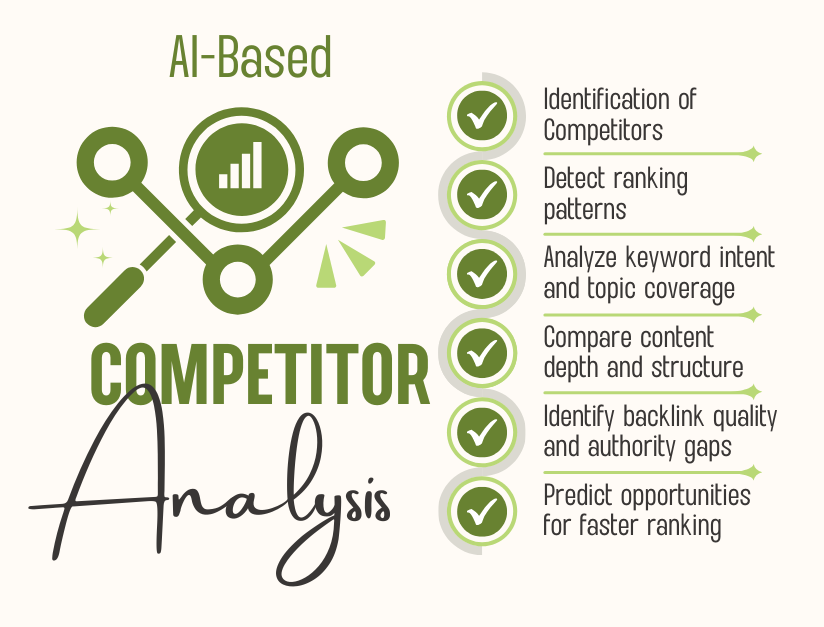
AI-based competitor SEO analysis uses artificial intelligence and machine learning to:
- Detect ranking patterns
- Analyze keyword intent and topic coverage
- Compare content depth and structure
- Identify backlink quality and authority gaps
- Predict opportunities for faster ranking
Unlike manual analysis, AI tools process large datasets and highlight insights that humans often miss.
Why AI-Based Competitor Analysis Matters in 2026
Search engines now rely heavily on intent, topical authority, and user experience. AI tools help you understand these signals at scale.
Key benefits:
- Saves time (hours → minutes)
- Finds hidden keyword opportunities
- Reveals content gaps competitors exploit
- Helps plan AEO + SEO + AI-friendly content
- Improves ROI by focusing on what actually ranks

Step-by-Step AI Competitor SEO Analysis Workflow
Step 1: Identify Your Real SEO Competitors
Your SEO competitors are not always your business competitors.
Use AI SEO tools to find:
- Websites ranking for your main keywords
- Pages appearing in featured snippets, PAA, and AI answers
📌 Tip: Pick 3–5 competitors who consistently rank in top positions.
Step 2: Keyword Gap Analysis (AI-Driven)
Keyword gap analysis shows:
- Keywords competitors rank for but you don’t
- Keywords where competitors rank higher
- Question-based and long-tail queries
What to analyze:
- Informational keywords (blogs)
- Commercial keywords (services)
- Local keywords (if applicable)
AI tools cluster keywords by intent, helping you plan content smarter instead of chasing random terms.

Step 3: Content Structure & AEO Analysis
AI search favors answer-first, well-structured content.
Analyze competitor pages for:
- H1–H3 heading structure
- Use of FAQs and schema
- Content length vs ranking position
- Lists, tables, and step-by-step sections
📌 Ask these questions:
- Are they answering the question early?
- Are they optimized for featured snippets?
- Do they cover subtopics better than you?
Step 4: Topical Authority & Content Clusters
AI SEO tools can map topic clusters used by competitors.
Check:
- Pillar pages (main guides)
- Supporting blog articles
- Internal linking patterns
If competitors cover an entire topic ecosystem and you have only one article, you will struggle to outrank them.
Step 5: Backlink & Authority Analysis (AI Scoring)
AI tools now score backlinks based on:
- Relevance
- Authority
- Spam signals
- Link velocity
Analyze:
- Where competitors get backlinks
- Which links actually boost rankings
- Local backlinks (for Maps/Local SEO)
📌 Focus on quality and relevance, not just quantity.
Step 6: UX & Technical SEO Comparison
AI tools analyze engagement and performance signals.
Compare:
- Page speed (Core Web Vitals)
- Mobile usability
- Bounce rate indicators
- Content readability
If competitors have faster, cleaner pages, Google may favor them even with similar content.

Step 7: SERP Feature & AI Visibility Analysis
In 2026, ranking #1 is not enough. You must win:
- Featured snippets
- People Also Ask
- AI Overviews
- Local Pack (Maps)
AI tools show:
- Which competitors own snippets
- What format Google prefers (list, table, paragraph)
This tells you how to format your content to win visibility.
Step 8: Conversion Gap Analysis
Traffic without conversions is wasted SEO.
Analyze competitor pages for:
- CTA placement
- Trust signals (reviews, case studies)
- Forms, WhatsApp, call buttons
- Page layout and flow
AI heatmap and UX tools help you identify why competitors convert better.
Best AI Tools for Competitor SEO Analysis (2026)
🔹 Keyword & Content Analysis
- AI-powered SEO suites (keyword gap, intent clustering)
- AI content analyzers (topic depth, NLP relevance)
🔹 Backlink & Authority Tools
- AI backlink analysis platforms
- Spam detection and authority scoring tools
🔹 Technical & UX Tools
- AI Core Web Vitals analyzers
- UX behavior and engagement tools
🔹 AEO & SERP Feature Tools
- Featured snippet trackers
- PAA and question-based keyword tools
📌 Tip: You don’t need all tools. Use 1 main SEO tool + 1 UX tool + 1 SERP feature tracker.
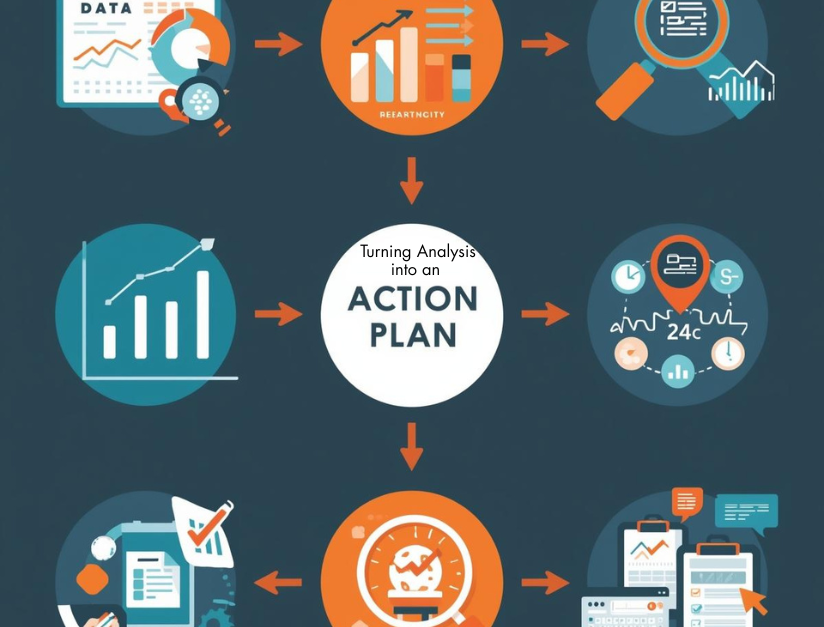
Turning Analysis into an Action Plan (Most Important)
AI data is useless without execution.
Create a competitor-beating plan:
- Target missing keywords (quick wins first)
- Rewrite or expand content using answer-first structure
- Build content clusters around main topics
- Improve internal linking
- Acquire 3–5 high-quality backlinks competitors have
- Optimize page speed and mobile UX
- Add FAQs and schema
- Improve CTAs and conversion flow
Common Mistakes to Avoid
Copying competitor content
Chasing every keyword shown by AI tools
Ignoring intent and conversions
Focusing only on backlinks
Not updating old content
AI should guide strategy, not replace thinking.
Final Thoughts
AI-based competitor SEO analysis in 2026 is about working smarter, not harder. When you understand why competitors rank—keywords, structure, authority, UX—you can build a strategy that outranks them sustainably. Use AI tools to uncover insights, then apply human judgment to create better, clearer, and more helpful content.

FAQs
AI-based competitor SEO analysis is the process of using AI-powered tools to study competitors’ keywords, content, backlinks, and ranking strategies to find opportunities and improve your SEO performance.
In 2026, search engines focus on intent, topical authority, and user experience. AI helps identify hidden ranking factors, content gaps, and keyword opportunities faster than manual analysis.
Popular tools include AI-powered SEO platforms for keyword gap analysis, content optimization, backlink analysis, SERP feature tracking, and UX performance insights.
Your real SEO competitors are websites ranking for your target keywords in Google, not just businesses in your industry. Use SEO tools to identify top-ranking domains for your keywords.
Keyword gap analysis identifies keywords your competitors rank for but your website doesn’t, helping you target new opportunities and improve rankings.
AI analyzes content depth, structure, intent, and topical coverage to show how competitor pages outperform yours and what topics you should add or improve.
Yes. Backlinks are still a major ranking factor. AI tools help evaluate link quality, relevance, and authority instead of just quantity.
AI tools identify snippet-winning formats and question-based queries, helping you structure content to rank in featured snippets and AI answers.
Ideally, perform competitor analysis every 3–6 months or whenever rankings drop, new competitors appear, or Google updates its algorithm.
Use insights to target missing keywords, improve content structure, build topic clusters, strengthen backlinks, optimize UX, and refine conversion strategy.