Search has changed. In 2026, ranking on Google is not only about keywords and backlinks. Search engines are now driven by AI, users expect instant answers, and many searches end without a click. That’s why beginners must understand three connected concepts: SEO, AEO, and AI Optimization. When you combine all three correctly, you build visibility across traditional rankings, featured snippets, “People Also Ask,” voice search, and AI-generated results.
This beginner guide explains everything in simple language and gives you a clear action plan.
What is SEO in 2026?
SEO (Search Engine Optimization) means improving your website so it ranks higher in search results and gets organic traffic. In 2026, SEO is still important, but the approach is more user-focused than ever.
SEO includes:
- Keyword research based on user intent
- On-page optimization (titles, headings, internal links)
- Technical SEO (speed, mobile usability, indexing)
- Content quality and topical authority
- Backlinks and brand trust
SEO is still the foundation, because without it, your pages may not be crawled, indexed, or ranked properly.
What is AEO?
AEO (Answer Engine Optimization) is the process of optimizing content so it appears as direct answers in search results. Instead of only trying to rank #1, AEO aims to win:
- Featured snippets (Position #0)
- People Also Ask (PAA) answers
- Voice search results
- AI answer citations (where available)
AEO is growing because users now ask more question-based queries like:
- “How to…”
- “What is…”
- “Best way to…”
- “Cost of…”
- “Benefits of…”
AEO helps your content become the answer, not just another search result.
What is AI Optimization in Search?
AI Optimization means creating content and website signals that AI-driven search systems can understand, trust, and cite. AI-based search doesn’t just match keywords—it understands:
- Meaning and context
- Topic depth
- User intent
- Trust signals (authority + reputation)
- Content structure and clarity
In 2026, AI systems prefer content that is:
- Clear and well-structured
- Helpful and experience-based
- Updated and accurate
- Written for humans, not stuffed with keywords
Why AEO + SEO + AI Optimization Work Best Together
If you do only SEO, you may rank but miss snippets and AI answers.
If you do only AEO, your content may be answer-friendly but lack authority.
If you focus only on AI optimization, you might miss technical and keyword fundamentals.
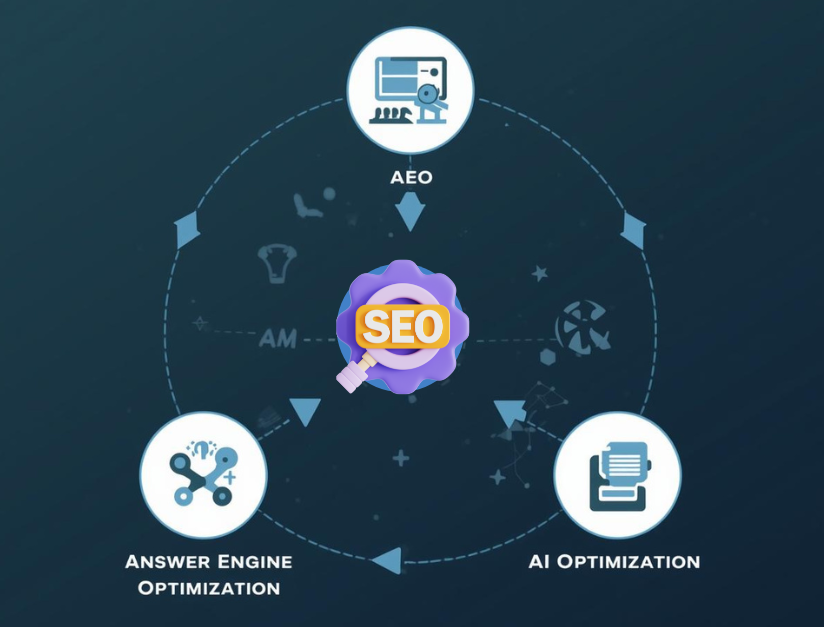
Together, they create a complete strategy:
- SEO helps you get indexed and rank
- AEO helps you win answers and zero-click visibility
- AI optimization helps you become a trusted source
Beginner Step-by-Step Strategy (2026)
Step 1: Start with Search Intent (Not Just Keywords)
Before writing content, understand why the user is searching.
Main intent types:
- Informational (learn)
- Commercial (compare)
- Transactional (buy/book)
- Local (near me, city-based)
Pick keywords that match the intent of your page. For example, a “service page” should target transactional intent, while a blog targets informational intent.
Step 2: Use Answer-First Content Structure (AEO Format)
To rank in snippets and AI answers, structure your content like this:
- H1: Main topic
- First 2–4 lines: Direct answer (40–70 words)
- H2s: Question-based sections
- Use bullets, steps, and short paragraphs
- End with FAQs
This makes your content easy for users and easy for AI to extract.
Step 3: Build Topical Authority (Topic Clusters)
In 2026, one blog is not enough. Search engines trust websites that cover a topic deeply.
Create:
- 1 pillar page (complete guide)
- 6–10 supporting blogs
- Internal links between them
This builds authority and improves rankings faster than random blog posting.
Step 4: Strengthen E-E-A-T (Trust Signals)
E-E-A-T stands for Experience, Expertise, Authoritativeness, Trustworthiness.
To improve it:
- Add author name + short bio
- Add About/Contact pages
- Show real examples or case studies
- Use testimonials and reviews
- Keep your website secure (HTTPS) and professional
AI-driven search rewards trust more than ever.
Step 5: Use Schema Markup (Optional but Powerful)
Schema helps search engines understand your content better.
Best schema types for beginners:
- FAQ schema
- HowTo schema
- Article schema
- LocalBusiness schema (for local businesses)
Schema increases eligibility for rich results and improves clarity for AI systems.
Step 6: Improve Technical SEO (So AI and Google Can Crawl You)
Even the best content won’t rank if your site is weak technically.
Focus on:
- Mobile-friendly design
- Fast loading speed (Core Web Vitals)
- Proper indexing (no “noindex” mistakes)
- Clean URL structure
- Internal linking and sitemap
Step 7: Update Content Regularly
AI results and SERPs change quickly. Updated content performs better.
Add:
- “Last updated: 2026”
- Updated tools, examples, screenshots
- New FAQs
- Better structure over time
Best Content Types for AEO + SEO + AI Optimization
If you’re a beginner, publish these first:
- How-to guides
- Beginner guides
- Checklists
- Comparisons (A vs B)
- FAQs and glossary pages
- Step-by-step tutorials
These formats naturally win snippets and AI answers.
Common Beginner Mistakes to Avoid
Many beginners lose rankings because they:
- Write long intros without answering the question
- Stuff keywords unnaturally
- Copy content from competitors
- Skip internal linking
- Ignore website speed and mobile UX
- Don’t add trust elements (About, author, contact)
Avoid these and your growth becomes faster and more stable.
Simple 30-Day Plan (Beginner Friendly)
Week 1: Keyword intent research + build content plan
Week 2: Publish 2 blogs using answer-first structure + FAQs
Week 3: Create 1 pillar page + internal links
Week 4: Add schema + improve speed + update content
This is enough to build a strong foundation.
Conclusion
In 2026, the smartest growth strategy is combining AEO + SEO + AI Optimization. SEO helps you rank, AEO helps you win answers, and AI optimization helps you become a trusted source. If you’re a beginner, focus on intent, structured content, topical authority, and trust signals—then improve technical SEO step by step.
FAQs
1) What is SEO in 2026?
SEO in 2026 is the process of improving your website to rank on search engines using user intent, helpful content, technical SEO, and trust signals—not just keywords and backlinks.
2) What is AEO (Answer Engine Optimization)?
AEO is optimizing content to appear as direct answers in Google results, like featured snippets, People Also Ask, and voice search answers.
3) What is AI Optimization in SEO?
AI Optimization means creating content and website signals that AI-driven search systems can understand, trust, and use—through clear structure, context, topical depth, and credibility.
4) Why should beginners learn AEO + SEO + AI Optimization together?
Because SEO helps you rank, AEO helps you win answer boxes, and AI optimization helps your content get trusted and cited in AI-driven search results.
5) What is the difference between AEO and SEO?
SEO focuses on ranking pages in search results. AEO focuses on making your content the “direct answer” shown on the search page itself.
6) What is “answer-first” content structure?
It’s a format where you give a clear 2–4 line answer immediately after the heading, then explain the topic in short sections with lists, steps, and FAQs.
7) How do I optimize for featured snippets in 2026?
Use question-based headings, provide a short direct answer (40–70 words), add bullet points or steps, and keep content easy to scan.
8) What is topical authority and why is it important?
Topical authority means covering a topic deeply with multiple related pages connected via internal links. It helps Google trust your site as an expert resource.
9) How does E-E-A-T help in AI-driven SEO?
E-E-A-T (Experience, Expertise, Authoritativeness, Trustworthiness) builds trust. In 2026, trustworthy and experience-based content performs better in search and AI results.
10) Do I need schema markup for AEO + SEO?
It’s not mandatory, but schema (FAQ, HowTo, Article) helps search engines understand your content and can improve visibility in rich results.
11) Can AI-written content rank in 2026?
It can rank if it’s genuinely helpful, accurate, and improved with human experience, examples, and trust signals. Generic AI content usually struggles.
12) What are the best content types for AEO + SEO + AI optimization?
How-to guides, checklists, comparisons, FAQs, tutorials, and pillar pages work best because they are structured and answer-focused.
13) How often should I update SEO content in 2026?
Update important pages every 1–3 months, especially if the topic changes quickly. Add “Last updated” and refresh examples, tools, and FAQs.
14) What are common beginner mistakes in 2026 SEO?
Keyword stuffing, copying competitors, long intros without answers, ignoring internal linking, weak trust pages, and slow mobile performance.
15) What is the fastest beginner roadmap to start ranking?
Start with intent-based keywords, publish 2–4 answer-first blogs, create one pillar page, add internal linking + FAQs, and improve basic technical SEO.