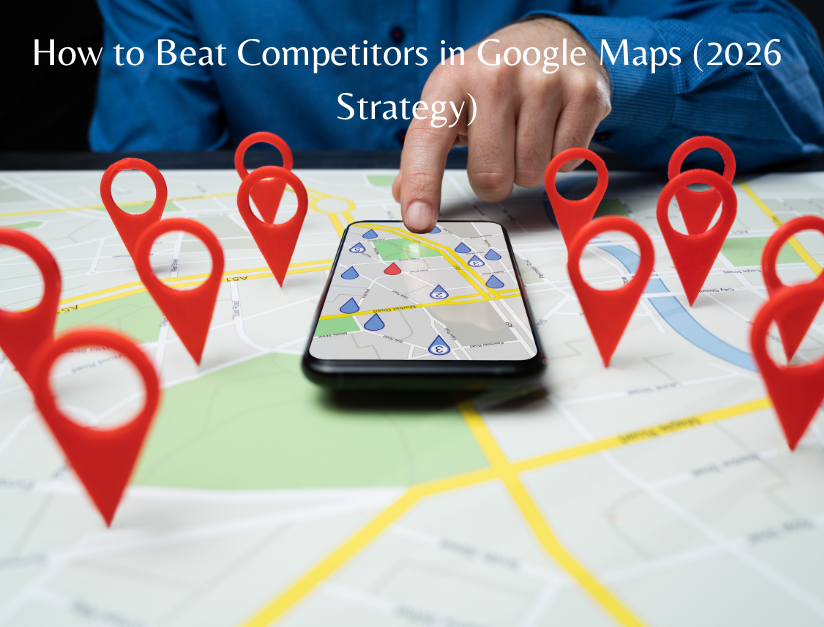
Beating competitors in Google Maps in 2026 is less about “adding more keywords” and more about improving the three core signals Google uses for local rankings: Relevance, Distance, and Prominence. You can’t control distance (proximity) much, but you can dominate relevance and prominence with the right Google Business Profile (GBP) setup, stronger trust signals, and better local authority.
Here’s a complete, practical strategy you can apply.

1) Start With a Competitor Audit (30 Minutes)
Pick your top 3 competitors in the Maps “Top 3” for your main keyword and location.
Compare these items:
- Primary category + secondary categories
- Number of reviews + average rating
- Review frequency (new reviews per month)
- Photos/videos quantity and freshness
- GBP posts frequency
- Services listed (and how detailed)
- Website quality and local content
- Backlinks/mentions (local authority)
This tells you what you need to match and what you can outperform.
2) Win the “Relevance” Game (Fastest Map Ranking Gains)
A) Fix Primary Category (Most Important)
Primary category decides what searches you show up for.
Goal: choose the exact best category, not a broad one.
Then add 3–6 relevant secondary categories.
B) Add Services Like a Pro (Not Just Names)
Add your top services in GBP with short descriptions.
Use natural keywords (no stuffing), include:
- Service name
- City/area if relevant
- Time/availability
- USP (what makes you different)
C) Use GBP Q&A as Mini-FAQs
Add 10–20 FAQs in Q&A:
- pricing
- areas served
- timings
- booking process
- “near landmark” questions
This increases relevance and converts users faster.

3) Win the “Prominence” Game (The Real Competitive Edge)
Prominence = your authority + trust + popularity.
A) Reviews Strategy That Beats Competitors
Reviews are one of the biggest drivers of Maps ranking and conversions.
2026 winning formula:
- Get reviews consistently (weekly), not in one burst
- Ask for detailed reviews (service + area + experience)
- Reply to every review within 24–48 hours
- Add real photos with reviews if possible
Goal: Beat competitors on review velocity, not only total reviews.
B) Photo & Video Strategy (Most Businesses Ignore This)
Upload:
- office/exterior + signage
- team photos
- service/work photos
- short videos (10–30 sec)
- before/after (if allowed)
Fresh media shows activity and builds trust.
4) Strengthen Your Website to Support Maps Rankings
Google uses your website to confirm relevance and trust.
What to build:
- 1 service = 1 dedicated page
- Local keyword in title/H1 (natural)
- FAQs on each service page
- Embed Google Map on contact page
- NAP consistency (same as GBP)
- LocalBusiness schema
If your competitor has a weak website, you can outrank them faster by building strong service pages.
5) Build Local Citations (Consistency + Trust)
Citations = your business listed across the web with consistent details.
Focus on:
- Google-verified and popular directories
- niche-specific directories
- local directories
Ensure NAP is identical everywhere.
Quality and consistency > quantity.
6) Get Local Backlinks (The “Unfair Advantage”)
Backlinks are still powerful for local prominence.
Best local sources:
- Local news / PR mentions
- Event sponsorship pages
- Partner websites
- Business associations
- Local bloggers
Even a few strong local links can beat many competitors who only rely on reviews.
7) Post Weekly on GBP (Signals Activity + Helps Conversions)
Post 1–2 times per week:
- offers
- updates
- service highlights
- testimonials
- FAQs
- seasonal posts
Consistency signals your business is active and trustworthy.
8) Fix Technical Issues That Block Visibility
Check these common problems:
- Duplicate GBP listings
- Wrong pin location
- Mismatch between website and GBP NAP
- Frequent edits causing re-verification
- Category mismatch
- Hidden address (for storefront businesses)
Fixing these can create sudden ranking jumps.
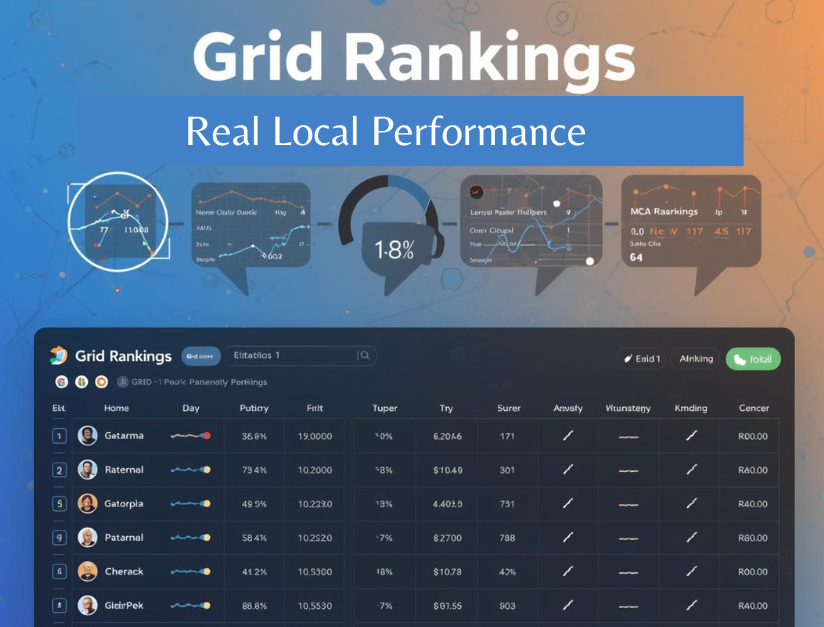
9) Track “Grid Rankings” (Real Local Performance)
Maps rankings differ by location. You might rank #2 near your office but #15 a few km away.
Use a grid tracker tool (or manual testing) to see where you’re weak and create content for those areas.
10) 30-Day Plan to Beat Competitors (Practical)
Week 1: Profile Fix + Relevance
- Correct category
- Add services + descriptions
- Add Q&A FAQs (5–8)
- Upload 15 photos
Week 2: Reviews + Media
- Start review request system (WhatsApp)
- Reply to all reviews
- Upload 10 more photos + 2 videos
- Post twice on GBP
Week 3: Website & Local Content
- Create/upgrade service pages
- Add FAQs + internal links
- Add LocalBusiness schema
- Improve speed and mobile UX
Week 4: Citations + Backlinks
- Build 15–30 citations
- Get 2–5 local backlinks (partners, PR, associations)
- Continue reviews + posts
Conclusion
To beat competitors in Google Maps in 2026, focus on what Google rewards most: relevance, prominence, and trust. Optimize your GBP properly, grow reviews consistently, keep your profile active with photos/posts, strengthen your website with local service pages, and earn local citations and backlinks. Do this consistently for 30–60 days and you’ll see real ranking improvement—even in competitive markets.
Competitors usually rank higher due to better relevance (right category/services), stronger prominence (more reviews, authority, backlinks), or closer proximity (distance factor).
The main factors are Relevance, Distance, and Prominence. You can improve relevance and prominence through GBP optimization, reviews, content, citations, and backlinks.
The fastest wins come from fixing your primary category, adding detailed services, improving NAP consistency, collecting reviews consistently, and uploading fresh photos regularly.
There’s no fixed number. Focus on review velocity (getting new reviews consistently) and detailed reviews. Even fewer reviews can win if they are frequent and high quality.
Posts mainly help engagement and conversions, but consistent posting signals activity. Posting 1–2 times per week is a good practice in 2026.
Fresh photos/videos increase trust, improve engagement, and signal profile activity. Businesses that upload media regularly often convert better and compete stronger.
A website isn’t mandatory, but it helps a lot. Strong service pages, local content, LocalBusiness schema, and fast mobile UX improve relevance and prominence.
Local citations are consistent listings of your business NAP on directories. They still matter for trust and verification, especially when your competitor has stronger citation coverage.
Yes. Quality local backlinks (news, associations, partners) are one of the strongest “prominence” signals and can help you outrank competitors faster.
Small improvements can show in 2–4 weeks, but competitive areas often take 30–90 days, depending on proximity, reviews, authority, and consistency of optimization.