If you already have dozens of blogs ranking for keywords but not showing in AI answers or Google AI Overviews, you don’t need new content.
You need to upgrade your existing blogs so that AI systems can read, trust and reuse them as answers.
This guide shows a practical, agency-ready method to convert old SEO blogs into AI-optimized content assets—the exact process we use at Mag Cloud Solutions.
First, what does “AI-optimized content asset” actually mean?
An AI-optimized content asset is a blog that:
- answers a real user question clearly,
- is structured for answer extraction,
- can be confidently reused by AI systems such as
Google AI Overviews, - and supports your service authority.
It is no longer just a traffic page.
It becomes a reference page.
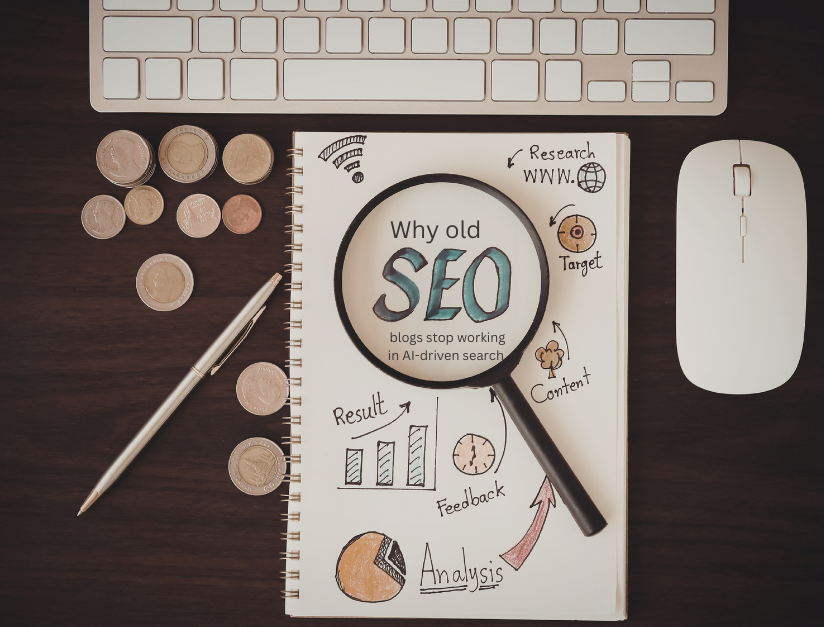
Why old SEO blogs stop working in AI-driven search
Most old blogs were written for:
- keyword coverage
- word count
- ranking formulas
Typical problems:
- answers are buried deep inside paragraphs
- multiple topics are mixed
- headings are written only for SEO, not meaning
- no FAQs
- no clear definitions
- promotional tone
AI systems struggle to extract clean, reliable answers from such pages.
Step-by-step: How to convert your old SEO blogs
Step 1 – Identify the real question your blog should answer
Open the old blog and ask one simple question:
What single question should this page clearly answer?
Not:
- what keyword it ranks for
But:
- what the reader actually wants to know
Example:
Old keyword focus:
“best digital marketing strategies”
Real question:
What digital marketing strategies work for small businesses today?
Your entire page must now support that one question.

Step 2 – Add a clear answer at the top
AI prefers fast answers.
Add a short, direct explanation immediately after your H1.
Example:
Bad opening
Digital marketing is a broad concept that has evolved over time…
AI-ready opening
Digital marketing strategies that work best for small businesses include SEO, local search optimization, performance advertising and conversion-focused content.
This 2–3 line block becomes the primary answer candidate.

Step 3 – Break long paragraphs into answer blocks
Old blogs usually have:
- long paragraphs
- multiple ideas mixed together
Convert them into:
- short sections
- one idea per paragraph
- one clear purpose per block
Each block should answer one small sub-question.
This helps AI isolate and reuse content safely.
Step 4 – Rewrite headings so they explain meaning
Old SEO headings look like:
- Best digital marketing tips
- Top SEO strategies
- Complete guide
AI-optimized headings explain intent:
- What digital marketing strategy works for local businesses?
- How SEO supports long-term lead generation
- When paid ads are better than organic marketing
Headings should read like real questions or explanations.
Step 5 – Add a “How it works” or “Process” section
AI strongly prefers procedural clarity.
Add a new section such as:
How this strategy works
Then use a clean list:
- Research and audience analysis
- Channel selection
- Content and campaign planning
- Implementation
- Tracking and optimisation
Even if your blog is informational, adding a clear process improves answer trust.
Step 6 – Remove keyword stuffing and rewrite for clarity
Search engines no longer need repeated phrases.
Replace:
- repetitive keyword usage
- forced variations
With:
- natural explanations
- simple language
- consistent terminology
AI understands meaning, not density.
Clarity improves both human and AI understanding.
Step 7 – Add real FAQs at the end of the blog
This is one of the strongest upgrades.
Add 4–6 real questions people actually ask.
For example:
- How long does this strategy take to show results?
- Is this suitable for small businesses?
- What budget is required?
- What mistakes should be avoided?
Write short, neutral answers.
AI frequently pulls answers from FAQ sections.
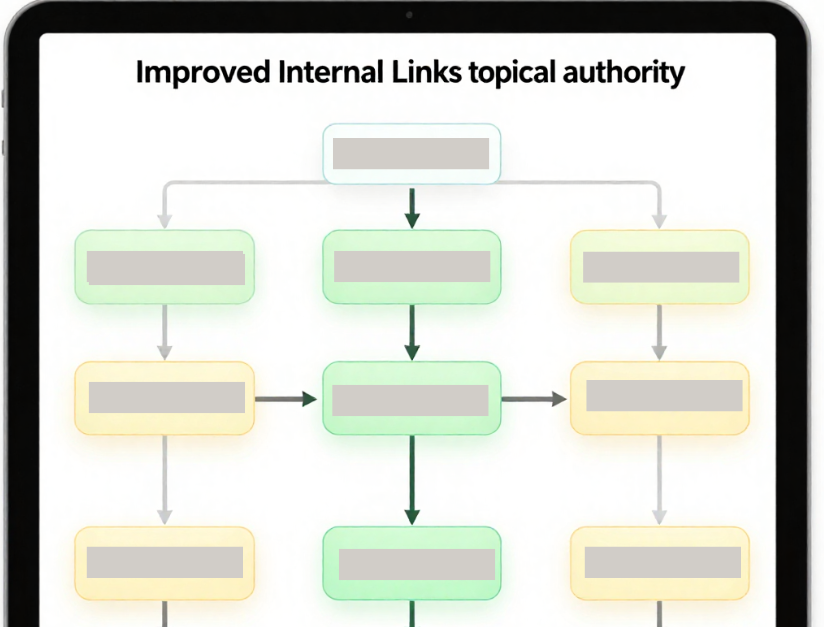
Step 8 – Improve internal links to show topical authority
Old blogs often stand alone.
Upgrade them by linking to:
- related blogs
- service pages
- supporting guides
Example:
From an SEO blog → link to:
- technical SEO page
- content optimisation guide
- AI optimisation service
This helps AI understand:
- your expertise depth
- topic relationships
- authority signals
Step 9 – Fix the HTML and content structure
Before publishing the updated blog, check:
- only one H1
- proper H2 and H3 hierarchy
- one topic per section
- no important content hidden in tabs
- no mixed CTA and explanation blocks
AI relies on clean structure to identify meaning boundaries.
Step 10 – Add light experience and credibility signals
You do not need case studies on every blog.
But you should add a small context block such as:
- who the article is written for
- what type of businesses it applies to
- how the strategy is typically implemented
This improves trust and relevance for AI systems.
What you should NOT do while updating old blogs
Avoid:
- rewriting only the introduction
- changing only keywords
- adding AI-generated filler text
- increasing word count without improving clarity
- merging unrelated topics
AI optimisation is about better answers, not bigger content.
Simple before vs after comparison
Old SEO blog
- keyword focused
- long paragraphs
- generic headings
- no FAQs
- unclear intent
AI-optimized content asset
- one clear question
- direct answer at the top
- short answer blocks
- process explanation
- FAQs
- internal topic links
Why this works especially well for agency websites
For service brands like Mag Cloud Solutions, upgraded blogs:
- support your service pages
- build topical authority
- help AI connect your expertise across the site
- and increase the chance of being referenced in AI answers
You don’t only get traffic.
You build answer visibility.
Quick conversion checklist
Use this before republishing any old blog:
- One main question per page
- Direct answer below H1
- Clear and meaningful headings
- One idea per section
- Process or step section added
- 4–6 real FAQs
- Strong internal links
- Clean heading structure
Final takeaway
Old SEO blogs are not useless.
They are under-structured.
When you convert them into AI-optimized content assets, you transform them from ranking pages into trusted answer sources.
In AI-driven search, visibility does not come from rewriting content.
It comes from re-structuring meaning.

An AI-optimized content asset is a blog that is structured to clearly answer a specific user question, making it easy for AI search systems to extract, understand and reuse the information.
Old SEO blogs usually focus on keywords and word count instead of clear answers, structured sections and intent-based explanations, which makes them difficult for AI systems to trust and reuse.
No. You only need to restructure the content, clarify the main question, improve headings, add direct answers and include relevant FAQs and internal links.
Content structure is extremely important because AI systems rely on clear headings, logical sections and short answer blocks to understand and extract information accurately.
Keywords should not be removed completely, but they should be used naturally. AI systems prioritise clarity, context and meaning over keyword repetition.
Yes. FAQs help AI identify direct answers to common user questions and significantly improve the chances of the blog being used in AI-generated responses.
Internal linking helps AI understand topic relationships across your website and strengthens topical authority, which improves trust and answer selection.
There is no fixed timeline. Recognition depends on how clearly the content answers user intent, how well it is structured and how authoritative the website is within the topic.