
In 2026, appearing on the first page of search results is no longer the final goal.
The real visibility advantage comes from being cited inside AI-generated answers.
With the expansion of AI-based search experiences by Google, businesses and publishers must now understand how AI systems decide which websites are safe, reliable and accurate enough to be referenced in Google AI Overviews.
For service-driven brands such as Mag Cloud Solutions, this change fundamentally alters how content, structure and authority should be built.
This guide explains, in practical terms, how Google AI selects its trusted sources in 2026.
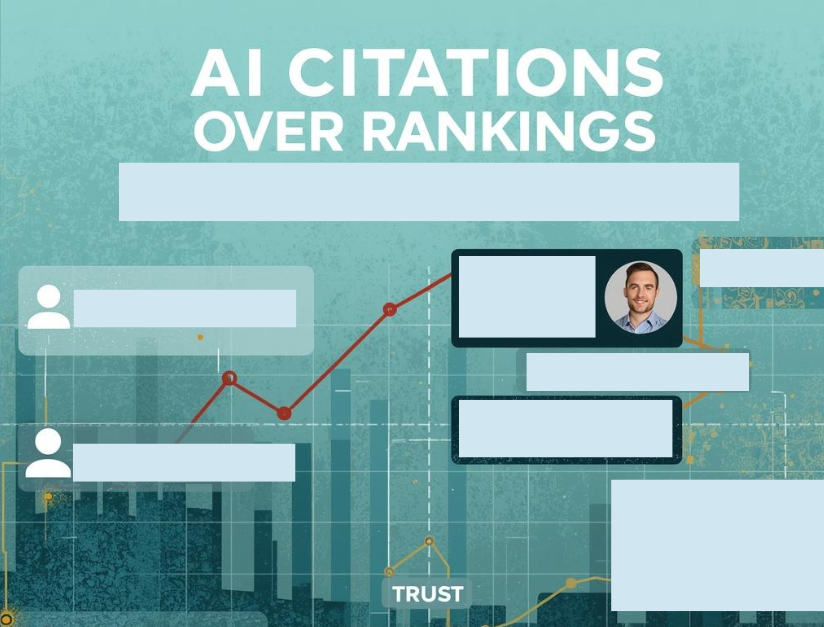
Why AI citations matter more than rankings
AI Overviews do not simply display a list of websites.
They generate an answer and then reference a small number of sources that support that answer.
This means visibility is no longer limited to where your page ranks.
Your content must be strong enough to become a reference layer for the AI system itself.
A page can rank on page one and still be ignored by AI Overviews if it fails to meet trust and clarity requirements.
Google AI does not “rank” pages for answers — it evaluates reliability
When generating an overview, Google’s AI systems perform a different type of evaluation compared to traditional ranking algorithms.
Instead of asking,
“Which page matches the query best?”,
the system asks,
“Which content can I confidently use to explain this topic to the user?”
This creates a shift from relevance-first evaluation to reliability-first selection.
The first requirement: clear topic ownership
AI systems must quickly understand what a page is actually about.
In 2026, pages that are frequently cited inside AI Overviews show three common patterns:
- one dominant topic,
- a clearly defined scope,
- and no unnecessary topic mixing.
When a single page tries to cover too many loosely related ideas, AI confidence drops.
The system struggles to determine whether the page truly represents expertise in any one area.
Clear topic ownership allows AI to associate your page with a specific knowledge area.
Direct and verifiable answers come before storytelling
AI Overviews are built to answer questions efficiently.
Websites that are cited usually present:
- a direct explanation near the top of the page,
- followed by supporting detail and clarification.
Long introductions, brand stories and promotional narratives delay the answer and reduce extractability.
AI systems prefer content that provides a short, precise explanation that can stand alone without relying on surrounding context.
If a paragraph cannot be used independently as a meaningful answer, it is rarely selected.

Structural clarity strongly influences trust
In AI-driven search, structure is not only a usability feature.
It is a trust signal.
Google AI relies on:
- consistent heading hierarchy,
- logical section separation,
- and stable content blocks.
This allows the system to identify:
- definitions,
- processes,
- comparisons,
- and supporting statements.
Pages that visually appear organised but lack semantic structure often fail to provide clear boundaries between ideas.
When boundaries are unclear, AI cannot safely extract information without risking misinterpretation.
Neutral and explanatory language increases credibility
Promotional writing reduces citation probability.
Phrases such as:
- “best company”
- “guaranteed results”
- “number one service provider”
do not contribute to informational accuracy.
AI systems are trained to favour content that explains how something works, why it works and in which situations it applies.
Explanatory writing increases the system’s confidence that the content is intended to inform rather than persuade.
In 2026, being cited is closely tied to being informative first and commercial second.

Context from the rest of the website is evaluated
Google AI does not evaluate a page in isolation.
It analyses how the page fits into the overall website.
Strong citation candidates usually belong to websites that:
- publish multiple related resources around the same subject,
- connect those pages using meaningful internal links,
- and maintain a consistent thematic focus.
This allows the AI system to identify topical depth and verify that the website genuinely operates within that domain of knowledge.
Isolated articles without supporting context are far less likely to be trusted as authoritative references.
Internal linking helps AI validate expertise
Internal links are no longer only navigation tools.
In AI Overviews, internal linking acts as a context map.
It helps Google AI understand:
- which topics support each other,
- which pages act as foundational explanations,
- and where deeper information can be found.
A well-connected content structure signals that your website is not publishing isolated content but maintaining an organised knowledge base.
This structure plays a major role in determining whether a site can be treated as a reliable source.

Freshness and consistency influence source selection
Google AI prefers content that:
- reflects current information,
- aligns with present industry practices,
- and shows consistent updates over time.
Outdated explanations, obsolete references and stale examples weaken the probability of being cited.
More importantly, AI systems look for consistency.
If multiple pages across your site present conflicting explanations about the same topic, trust decreases even if individual pages appear well written.
Technical accessibility affects citation eligibility
Before any trust evaluation can occur, the content must be reliably accessible.
Pages that depend heavily on delayed JavaScript rendering, dynamic injection or hidden interface components can create uncertainty for AI extraction systems.
When content structure cannot be rendered consistently, AI systems avoid using that content as a reference.
Stable, well-rendered HTML and predictable layouts improve extraction reliability and reduce processing ambiguity.

Experience and operational transparency increase confidence
In 2026, Google AI increasingly evaluates whether content reflects real operational knowledge.
Pages that describe:
- real workflows,
- realistic timelines,
- practical limitations,
- and implementation steps
tend to perform better as reference sources.
Generic advice that lacks operational detail often appears indistinguishable from automatically generated or reworded content.
Practical clarity demonstrates experience and strengthens trust.
Why service websites are evaluated more strictly
For service-based businesses, being cited inside AI Overviews carries higher responsibility.
When users search for professional services, AI must avoid recommending misleading or low-quality providers.
As a result, service pages are evaluated with stronger emphasis on:
- clarity of scope,
- explanation of process,
- industry relevance,
- and organisational credibility.
This makes structured service descriptions, realistic expectations and well-defined deliverables especially important.
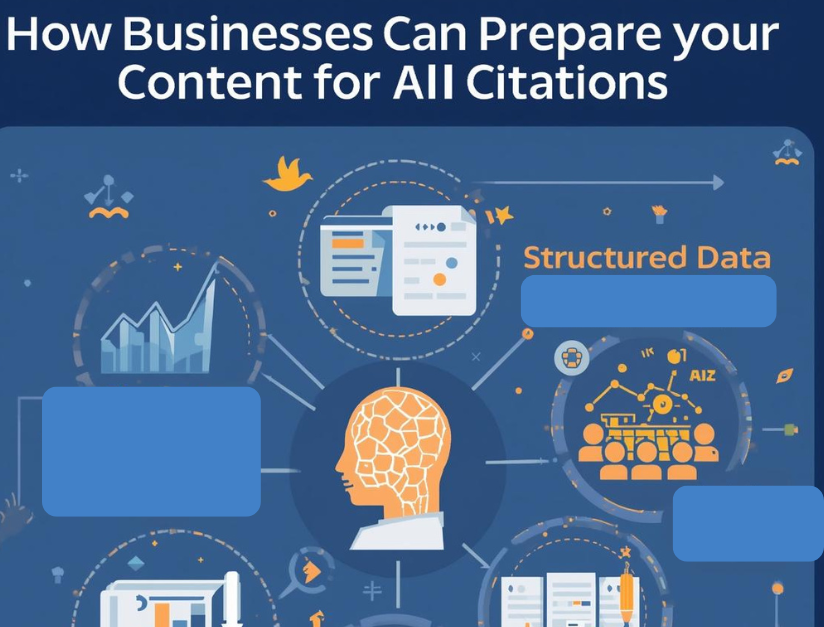
How businesses should prepare their content for AI citations
To improve the likelihood of being cited as a trusted source in AI Overviews, businesses should focus on:
- creating pages that answer one clear question or topic,
- placing a concise and factual explanation near the top of the page,
- using structured sections with descriptive headings,
- linking to related internal resources to demonstrate topical depth,
- maintaining neutral, professional language,
- and keeping content updated and consistent across the website.
This approach builds a reference-ready content environment rather than a ranking-focused content library.
The real shift in 2026
In 2026, Google AI Overviews are not selecting the most optimised pages.
They are selecting the most usable explanations.
Being cited is no longer about how well a page is tuned for algorithms.
It is about how confidently an AI system can rely on your content to inform users.
Final takeaway
Google AI Overviews choose trusted sources by evaluating clarity, structure, topical consistency, contextual authority and operational credibility across an entire website.
Websites that position their content as a reliable knowledge resource—rather than purely as a marketing channel—are the ones most likely to be referenced in AI-generated answers.
In the new search environment, success is not measured by where your page appears.
It is measured by whether your content is trusted enough to speak on your behalf.

Google AI Overviews are AI-generated summaries shown in search results by Google, created using information extracted from multiple trusted web pages.
Google AI selects websites that provide clear answers, strong content structure, consistent topic focus and reliable contextual signals across the site.
No. A page can rank well but still not be cited if the content is not structured clearly enough for AI to safely extract and reuse as an answer.
Content that offers direct explanations, well-organised sections, step-by-step processes and neutral, informative language is more likely to be selected.
Clear headings, logical sections and focused paragraphs help AI systems identify topic boundaries and extract accurate answer segments.
Yes. Internal links help AI understand topic relationships, depth of coverage and which pages support a core subject area.
Yes. Highly promotional or exaggerated claims lower confidence because AI systems prioritise factual and explanatory information.
Businesses should publish answer-focused content, maintain topical consistency, improve page structure, connect related pages through internal links and keep information updated.