
If your website is indexed but still getting zero or very low impressions, it means your pages are not appearing in search results often. This is a common issue, especially after AI-driven search changes introduced by Google, where visibility depends heavily on content clarity, structure, and trust, not just publishing pages.
For businesses and agencies like Mag Cloud Solutions, impressions are the first step toward traffic, leads, and growth. Without impressions, clicks cannot happen.
This guide explains the real reasons why your website is not getting impressions and how to fix them.
What does “impressions” mean?
An impression is counted when your website appears in Google search results—even if nobody clicks.
If impressions are low, it means:
- Google is not showing your pages often, or
- your content does not match search demand.
Main reasons why your website is not getting impressions
1. Your website targets topics with no search demand
One of the biggest reasons is choosing the wrong topics.
If nobody searches for your topic, Google cannot show your page.
For example:
A blog titled:
“Importance of modern digital success solutions”
may sound good but has no real search demand.
Instead, target real queries like:
- how to get SEO clients
- why website is not ranking
Use topics people actually search.
2. Your website lacks topical authority
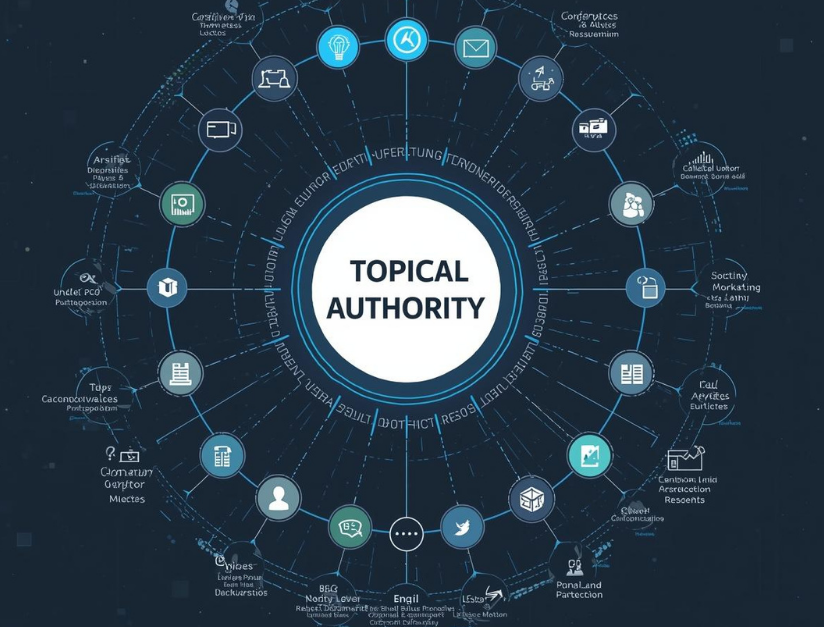
Google prefers websites that consistently cover a subject.
If your website has only a few unrelated articles, Google may not trust it enough to show frequently.
You need:
- multiple blogs in one niche
- connected topics
- consistent publishing
Authority builds impressions.
3. Your content does not match search intent
Search intent means the real goal behind the search.
If users search:
“SEO checklist”
but your page is promotional instead of educational, Google may not show it.
Your content must match what users expect.
4. Your website is new
New websites take time to gain trust.
Google tests new websites slowly.
You may see low impressions for:
- first 1–3 months
This is normal.
Consistent publishing improves visibility.
5. Poor keyword targeting
If you target highly competitive keywords, your website may not appear.
Example:
Targeting:
SEO services
is difficult.
Instead target:
SEO services for dentists
Long-tail keywords improve impressions faster.
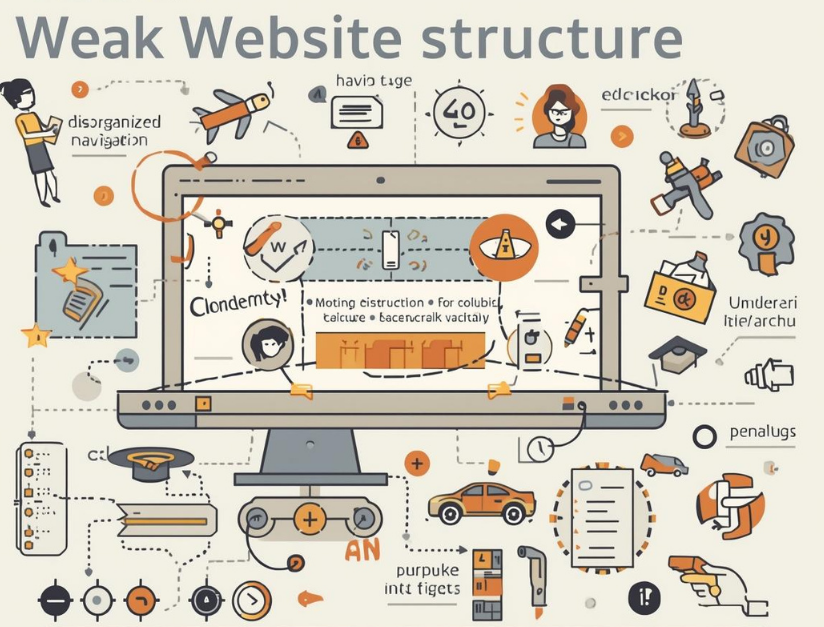
6. Weak website structure
Google must understand your website structure.
Poor structure causes:
- confusion
- low trust
- low impressions
Use:
- proper headings
- internal linking
- organised content
Structure improves visibility.
7. Low website trust and authority
Google shows trusted websites more often.
If your website has:
- no backlinks
- no authority
- no reputation
impressions remain low.
Build trust gradually.
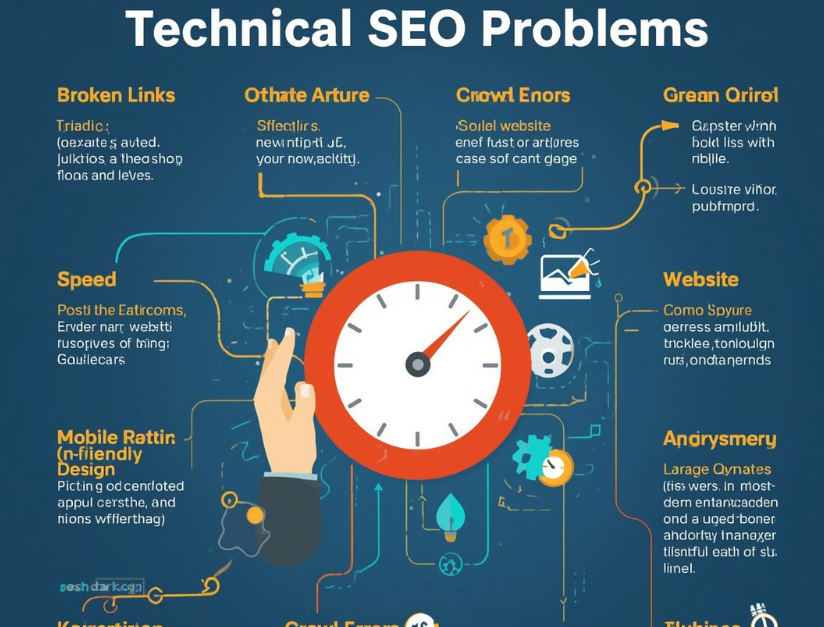
8. Technical SEO problems
Technical issues can reduce impressions.
Common issues:
- pages not indexed
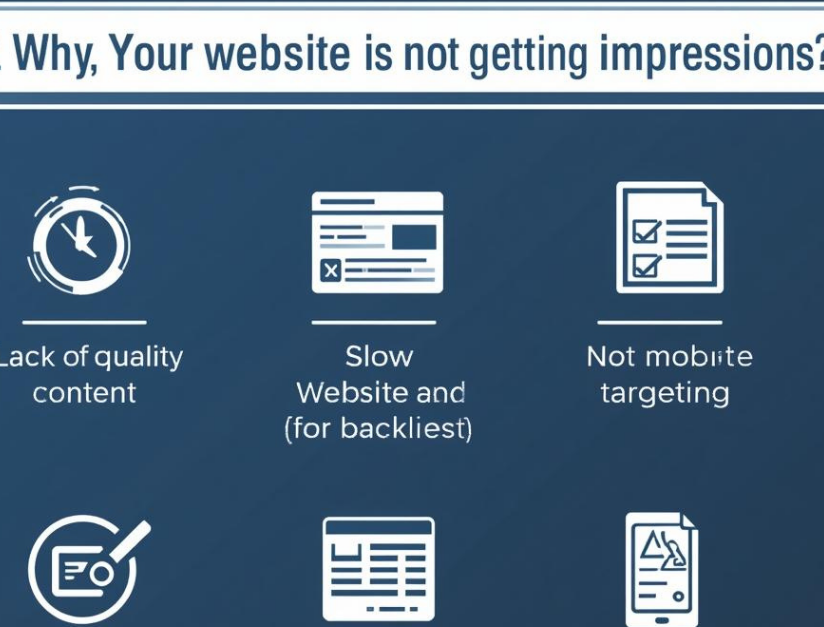
- slow website
- poor mobile experience
- crawl errors
Fix technical SEO.
9. Your content is not useful enough
Google prioritises helpful content.
If your content is:
- thin
- copied
- or unclear
Google will not show it.
Write helpful content.
10. Google AI prefers better structured competitors
After AI updates, Google prefers:
- clear content
- structured answers
- trusted websites
If competitors explain topics better, they get impressions.
Improve content quality.
How to increase website impressions
Follow these proven steps:
Publish high-demand topics
Write blogs people search.
Focus on one niche
Build topical authority.
Target long-tail keywords
They rank faster.
Improve internal linking
Connect related pages.
Publish regularly
Consistency builds trust.
Improve content quality
Write helpful, clear content.
How long does it take to get impressions?
Typical timeline:
- New website: 1–3 months
- Growing website: 3–6 months
- Established website: consistent impressions
SEO takes time.
Final takeaway
If your website is not getting impressions, it means Google does not see strong reasons to show your pages yet.
This can be fixed by:
- choosing better topics
- improving content
- building authority
- and publishing consistently
In 2026, impressions come from trust, relevance, and clarity—not just publishing pages.
FAQS
Your website may not be getting impressions due to low search demand topics, poor keyword targeting, lack of authority, or content that does not match user intent.
A new website usually starts getting impressions within 1 to 3 months, depending on content quality, competition and SEO optimisation.
Yes, a website can be indexed but get zero impressions if Google does not find the content relevant, useful or competitive enough to show in search results.
You can increase impressions by targeting low-competition keywords, publishing helpful content, improving website structure and building authority.
Yes, backlinks improve website trust and authority, which helps Google show your pages more frequently.
Yes, high-quality, useful and well-structured content increases your chances of getting impressions.
Impressions can drop due to Google updates, increased competition, technical issues or changes in search demand.
Yes, AI-driven search prioritises helpful, structured and trustworthy content, which affects how often your website appears in search results.