
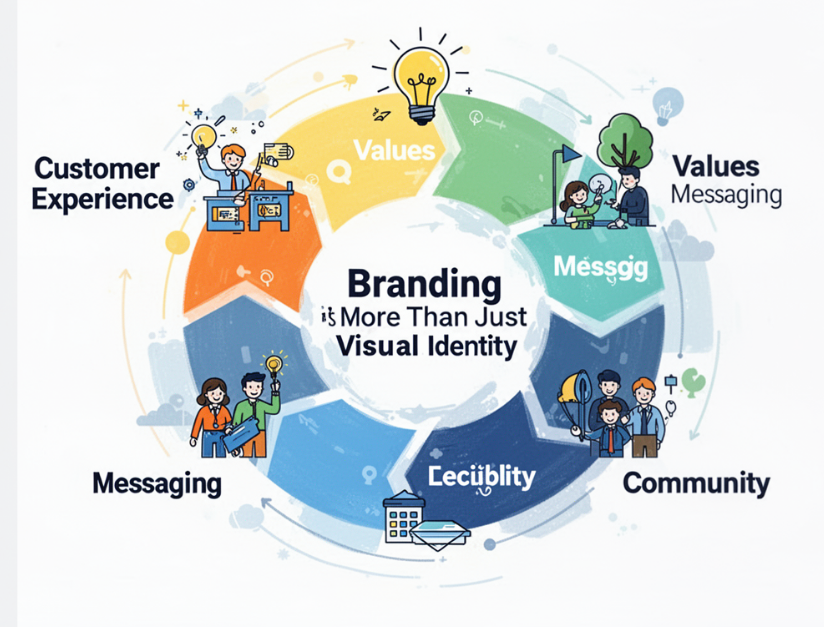
Many businesses believe branding is limited to creating a logo, choosing colors, and designing a website. While these visual elements are important, they are only a small part of what branding truly represents. Branding goes much deeper. It defines how people perceive your business, how they remember you, and why they trust you.
In today’s competitive digital world, branding is not just about how your business looks. It is about how your business feels, communicates, and positions itself in the minds of customers.
Branding is the perception people have about your business
Your brand is not your logo. Your brand is the impression people form when they hear your business name.
When customers think about your business, they associate it with certain qualities such as:
- trust
- professionalism
- expertise
- reliability
These associations form your brand.
Your logo helps people recognise you, but your actions and communication determine how they perceive you.

Logo and design create recognition, not trust
A logo makes your business identifiable. It helps people visually recognise your brand.
But recognition alone is not enough.
People may recognise many logos, but they trust only a few brands.
Trust develops from:
- consistent communication
- valuable information
- professional presence
- and positive experiences
Without trust, visual identity has limited impact.
Branding is how you communicate your value
Branding defines how clearly you communicate:
- what you do
- who you help
- and why your business matters
If your messaging is unclear, people will not understand your value.
Strong branding makes your business easy to understand.
Clarity improves customer confidence.

Branding builds emotional connection
Customers do not choose businesses based only on logic. They also choose based on how they feel.
Branding creates emotional connections.
When your brand communicates consistently and professionally, customers feel more confident in choosing you.
This emotional comfort improves loyalty.
Branding creates memorability
People remember brands that have a clear and consistent presence.
This includes:
- consistent messaging
- consistent tone
- consistent positioning
Memorability increases brand recall.
Brand recall increases business opportunities.

Branding influences customer decisions
Before contacting a business, customers evaluate its brand.
They look at:
- website
- content
- social presence
- communication style
These elements shape their perception.
A strong brand increases the likelihood of being chosen.
Branding builds authority
Authority is a major factor in business growth.
Businesses that demonstrate expertise and professionalism develop stronger brands.
Authority improves credibility.
Credibility improves trust.
Trust improves conversions.
Branding creates differentiation
Many businesses offer similar services.
Branding helps customers understand why your business is different.
Without branding, businesses appear interchangeable.
With strong branding, businesses become distinctive.
Distinctive brands are easier to remember.

Branding supports long-term growth
Marketing activities may create short-term visibility.
Branding creates long-term value.
A strong brand continues to attract customers even when marketing activity slows down.
Brand strength compounds over time.
Branding includes every customer interaction
Branding is reflected in:
- your website
- your content
- your customer communication
- your service quality
Every interaction influences your brand perception.
Branding is built continuously.

The biggest mistake businesses make
Many businesses focus only on visual identity.
They create a logo and believe their branding is complete.
But branding requires consistent effort in communication, positioning, and trust building.
Visual design alone cannot create a strong brand.
What truly defines a strong brand
A strong brand is defined by:
- clarity
- consistency
- trust
- authority
- and meaningful communication
Visual identity supports branding, but it does not replace these factors.
Final takeaway
Branding is much more than logo and design.
It is the complete perception people have about your business.
Your logo helps people recognise you.
Your branding helps people trust you.
In the modern digital environment, businesses that focus on building strong brand identity—not just visual design—achieve greater visibility, trust, and long-term success.
FAQS
Branding is the overall perception people have about your business based on your communication, reputation, and customer experience, not just your logo.
A logo helps people recognise your business, but branding includes trust, messaging, authority, and customer perception.
Branding includes brand message, tone, positioning, customer experience, content, and visual identity.
Strong branding builds trust, improves customer recall, increases credibility, and helps attract more customers.
Logo design is a visual symbol, while branding is the complete identity and perception of your business.
Strong brands communicate clearly, maintain consistency, and demonstrate professionalism, which builds trust.
Branding develops over time through consistent communication, quality service, and trust building.
Yes, branding helps small businesses build credibility, compete effectively, and grow faster.




















2 Responses
Some genuinely wonderful content on this website , thankyou for contribution.
Thank you for your kind words! We’re glad you found the information helpful. Stay connected for more useful insights and updates.