

In today’s digital world, many businesses believe that a complex and visually heavy website will impress visitors. They add animations, multiple design elements, and advanced features hoping to create a strong impact. However, in reality, simple websites often perform much better in terms of user experience, trust, and conversions.
Simplicity is not a weakness. It is a strength. A simple website helps visitors understand your business faster, trust your brand more easily, and take action without confusion.
Simple websites are easier to understand
When visitors land on your website, they want to quickly know:
- what your business does
- how it can help them
- and what they should do next
If your website is cluttered with too many elements, visitors may feel confused.
Simple websites communicate clearly.
Clarity improves user confidence.
Simple design improves user experience
User experience plays a major role in website performance.
A simple website:
- is easy to navigate
- loads faster
- and feels comfortable to use
Visitors stay longer when they feel comfortable.
Comfort increases engagement.
Faster websites perform better
Website speed is critical.
Complex websites with heavy design elements often load slowly.
Slow websites frustrate visitors.
Many users leave before the page finishes loading.
Simple websites load faster.
Fast websites retain visitors.

Simple websites build more trust
Visitors associate simplicity with professionalism.
Clean and organized websites appear more reliable.
Cluttered websites may appear unprofessional.
Trust influences customer decisions.
Simple presentation strengthens credibility.
Simplicity helps visitors focus on important information
When there are fewer distractions, visitors can focus on your message.
They can understand:
- your services
- your value
- and your expertise
Focus improves understanding.
Understanding improves conversions.

Simple websites are easier to navigate
Visitors should be able to move through your website easily.
Simple navigation helps users find information quickly.
Difficult navigation creates frustration.
Frustration increases exit rates.
Ease improves satisfaction.
Simple websites perform better in search engines
Search engines prefer websites that provide good user experience.
Simple websites usually have:
- better structure
- faster speed
- and clearer content
These factors improve visibility.
Better visibility increases traffic.
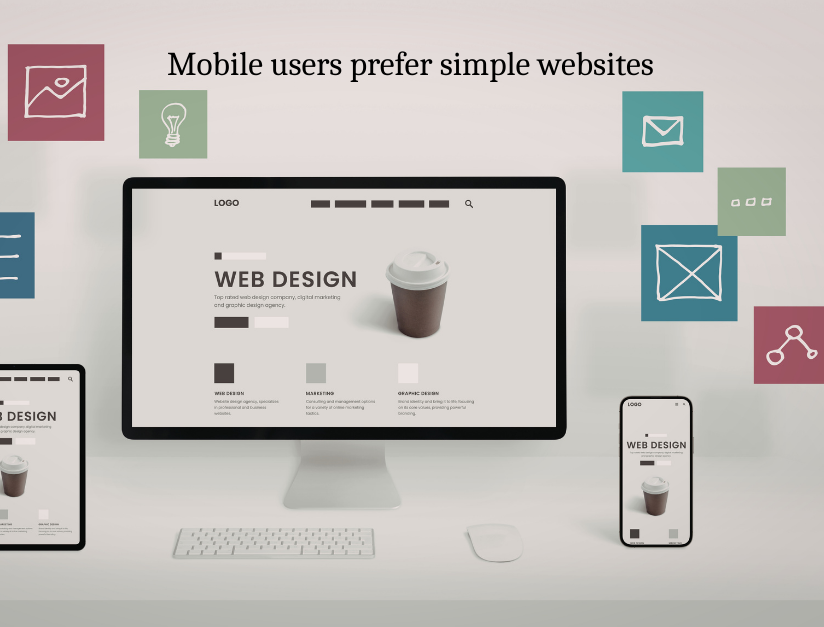
Mobile users prefer simple websites
Most users access websites through mobile devices.
Simple websites adapt better to mobile screens.
Complex websites may not function properly on smaller devices.
Mobile-friendly websites perform better.
Simplicity improves conversion rates
Conversion happens when visitors take action.
For example:
- contacting your business
- filling a form
- or making a purchase
Simple websites make it easier for users to act.
Less confusion leads to better decisions.
Better decisions increase conversions.
Simple websites are easier to maintain
Complex websites require more maintenance.
They are harder to update.
Simple websites are easier to manage.
This ensures consistency.
Consistency improves performance.
The biggest myth: Complex websites look more impressive
Many businesses believe complexity creates a premium impression.
In reality, users prefer clarity.
They value ease over decoration.
Professional websites focus on communication, not decoration.
What makes a website simple and effective
A simple website focuses on:
- clear messaging
- clean layout
- fast loading
- easy navigation
- and helpful content
These elements improve overall performance.
Final takeaway
Simple websites perform better because they make it easier for visitors to understand, trust, and engage with your business.
They improve:
- user experience
- trust
- engagement
- and conversions
In modern digital environments, simplicity creates strength.
The best-performing websites are not the most complex.
They are the easiest to use and understand.
FAQS
Simple websites perform better because they are easier to use, load faster, and help visitors understand the content quickly.
Yes, simple websites often rank better because they provide better user experience, faster loading speed, and clear structure.
Simple websites reduce confusion, improve navigation, and help users find information easily.
Yes, simple websites have fewer heavy elements, which improves loading speed and performance.
Clean and professional design makes websites look reliable and easier to understand.
Yes, simple websites help users focus on important actions like contacting or purchasing, which improves conversions.
Complex websites can slow down performance and confuse users, which may negatively affect SEO.
Clear layout, fast loading speed, easy navigation, and helpful content make a website simple and effective.