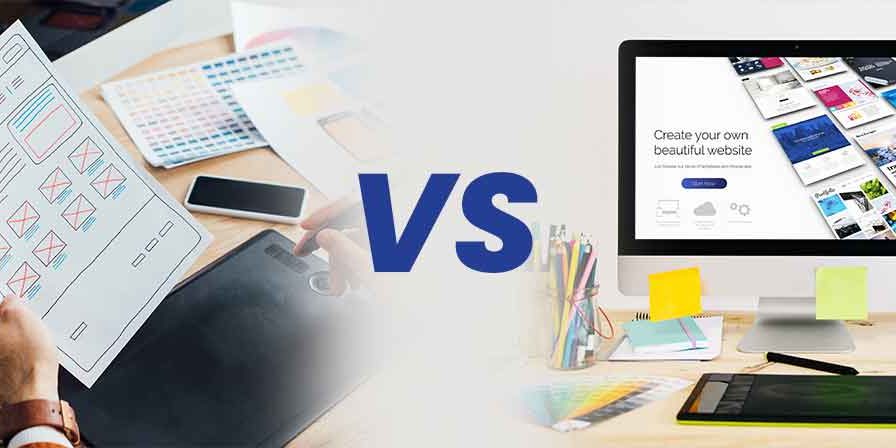
A professional website is an essential part of building a successful business online. It helps businesses showcase their services, attract potential customers, build trust, and generate leads. However, before starting a website project, business owners often face an important question: should they choose a ready-made template or invest in custom website development?
Both approaches have advantages. Ready-made templates can help businesses launch quickly, while custom development offers greater flexibility and control over functionality, design, and future growth.
The right choice depends on your business goals, budget, technical requirements, and long-term plans. In this guide, we will explore the differences between custom website development and ready-made templates to help you make an informed decision.
What Is Ready-Made Template Development?
A ready-made template is a pre-designed website layout that can be customized with your business name, images, colors, content, and branding.
Platforms such as WordPress and Shopify provide access to thousands of themes and templates. These solutions allow businesses to create websites without building every component from scratch.
For example, a small business launching a basic service website may choose a WordPress theme and customize it using a page builder such as Elementor. Similarly, an online retailer can select a Shopify theme and configure product pages, navigation, and checkout settings.
Advantages of Ready-Made Templates
1. Faster Development
Templates provide an existing structure, reducing the time required to build a website. Businesses can often launch sooner because many standard design elements are already available.
2. Lower Initial Cost
A template-based website can be more affordable than a fully custom solution. This makes it attractive for startups, freelancers, and small businesses working with limited budgets.
3. Easier Content Management
Many templates integrate with popular content management systems. Website owners can update text, images, blog posts, and other content through an administrative dashboard.
4. Existing Features
Templates may include ready-made page layouts, responsive sections, navigation menus, and styling options. Depending on the platform, additional functionality may be available through plugins or apps.
Limitations of Ready-Made Templates
Although templates offer convenience, they may not be suitable for every project.
A template might not support a unique business process without additional customization. Some themes also include unnecessary features or scripts that can affect website performance.
Businesses may encounter design limitations when trying to create a distinctive brand experience. In addition, using a popular template without meaningful customization can make a website look similar to competitors’ websites.
The total cost can also increase if the project requires multiple premium plugins, paid apps, or developer modifications.
What Is Custom Website Development?
Custom website development involves creating a website according to a business’s specific requirements. Instead of relying entirely on an existing layout, developers build or modify components to support the desired design, functionality, and user experience.
Custom development can be performed using technologies such as HTML, CSS, JavaScript, PHP, Laravel, WordPress, and other frameworks or platforms.
For example, a business may need a custom customer dashboard, an advanced booking system, a property listing platform, or an integration between its website and CRM. These requirements may benefit from a tailored development approach.
Advantages of Custom Website Development
1. Greater Design Flexibility
A custom website can be designed around your brand identity, target audience, and business objectives. Layouts, interactions, and page structures can be created to match your requirements.
2. Tailored Functionality
Developers can build features that support your specific business operations. This may include custom forms, dashboards, reporting tools, user permissions, booking workflows, or third-party integrations.
3. Better Control Over Performance
A well-planned custom solution can avoid unnecessary components and focus on the functionality the website actually needs. However, performance still depends on implementation quality, hosting, caching, and ongoing optimization.
4. Scalability
As your business grows, the website may need additional features, integrations, or user capacity. A carefully designed architecture can make future improvements easier to implement.
5. Stronger Brand Differentiation
A website tailored to your business can help you stand out from competitors and provide a more consistent brand experience.
Potential Challenges of Custom Development
Custom development generally requires more planning, development time, and testing than a simple template-based project.
The initial cost may also be higher because developers need to build and validate additional functionality. Maintenance is another consideration: custom features require documentation, updates, and technical support.
For these reasons, businesses should define their requirements clearly before starting a custom website project.
Custom Development vs. Templates: Key Differences
| Factor | Ready-Made Template | Custom Development |
|---|---|---|
| Initial cost | Usually lower | Often higher |
| Launch time | Usually faster | Depends on complexity |
| Design flexibility | Based on template limitations | Highly flexible |
| Special functionality | May require plugins or modifications | Can be built around requirements |
| Maintenance | Theme and plugin updates | Depends on custom architecture and components |
| Scalability | Depends on platform and theme | Can be planned around growth |
| Best suited for | Standard websites and quick launches | Specialized features and business workflows |
Neither option is automatically better. The best solution is the one that meets your requirements without introducing unnecessary cost or complexity.
Which Option Is Best for Small Businesses?
For a small business that needs a straightforward website, a ready-made template can be an excellent starting point.
A local service provider, consultant, restaurant, or freelancer may only need a homepage, service pages, contact form, and blog. A well-configured WordPress or Shopify theme may provide everything required.
However, businesses should avoid choosing a template based only on its appearance. Mobile responsiveness, accessibility, performance, content flexibility, security, and update compatibility are equally important.
When Should You Invest in Custom Development?
Custom development becomes more valuable when your website must do more than display standard content.
Consider a tailored solution if your business requires:
- Complex booking or appointment workflows.
- Customer or vendor dashboards.
- Advanced search and filtering.
- Custom payment or subscription processes.
- Integrations with CRM, ERP, or external APIs.
- Unique business rules and automated workflows.
- Specialized reporting or user permissions.
A hybrid approach is also possible. Businesses can start with WordPress or Shopify and add custom functionality as their needs evolve. This can balance affordability with flexibility.
Why Performance and SEO Matter
Regardless of the development method, a website should be built with search engine optimization and user experience in mind.
Important considerations include descriptive page titles, useful meta descriptions, logical heading structures, clean URLs, mobile-friendly layouts, optimized images, internal links, and fast loading times.
A custom website is not automatically SEO-friendly, and a template website is not automatically slow. Both require proper implementation and ongoing maintenance.
Businesses should also monitor website analytics, search performance, conversion rates, and user behavior to identify opportunities for improvement.
How Mag Cloud Solutions Can Help
Choosing between a template and custom development depends on your business goals and technical requirements. At Mag Cloud Solutions, we help businesses create professional websites and online stores tailored to their needs.
Our services include WordPress development, Shopify store development, PHP development, Laravel applications, custom website functionality, and website optimization.
Whether you need a simple business website, a customized eCommerce store, or a web application with specialized features, our team can help you evaluate the options and plan an appropriate solution.
Conclusion
Ready-made templates and custom website development both have a place in modern web development. Templates offer a practical route to launching a website quickly, while custom development provides greater flexibility for businesses with specialized requirements.
Before making a decision, consider your budget, required features, launch timeline, maintenance needs, and expected business growth.
The goal is not simply to build a website. It is to create a reliable digital platform that supports your business and provides a positive experience for your customers.
Need a website for your business? Contact Mag Cloud Solutions today.
- Phone: +91 9536899899
- Email: sales@magcloudsolutions.com
- Website: https://magcloudsolutions.com/