The retail industry has changed significantly as customers now interact with businesses through multiple channels. A customer may discover a product on social media, visit an ecommerce website to learn more, check availability through a mobile device, and finally purchase the product online or from a physical store.
This change has made omnichannel retail an important strategy for modern businesses.
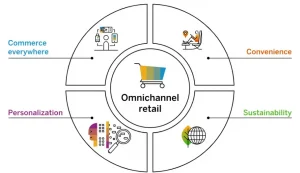
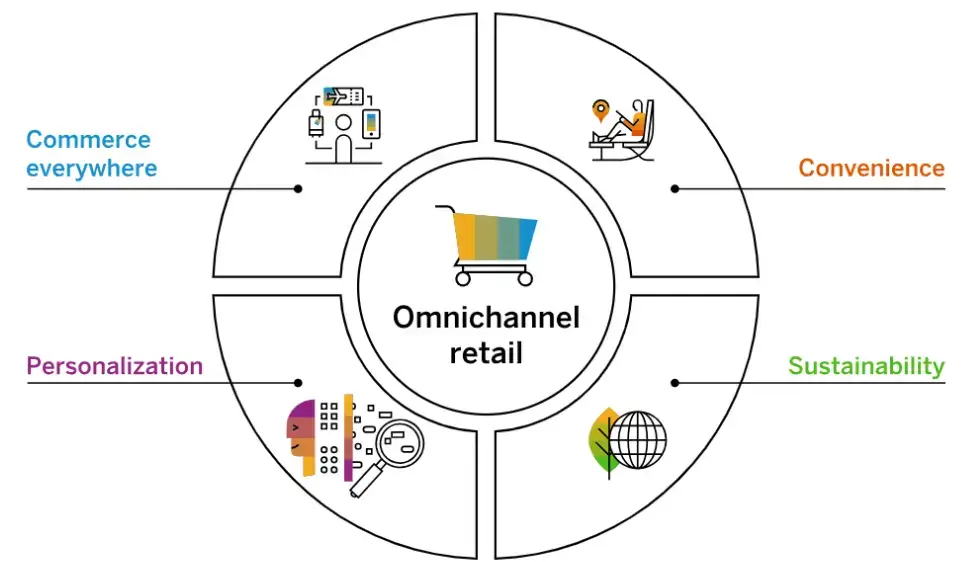
Omnichannel retail focuses on connecting different sales and communication channels so customers can experience a consistent journey regardless of where they interact with a business. Instead of treating websites, physical stores, mobile apps, marketplaces, and social media as completely separate channels, businesses can connect them through shared data and technology.
What Is Omnichannel Retail?
Omnichannel retail is an approach where a business integrates multiple customer touchpoints into a connected shopping experience.
These touchpoints may include:
- Physical retail stores
- Ecommerce websites
- Mobile applications
- Social media
- Online marketplaces
- Email marketing
- Customer service
- Messaging platforms
The goal is to make these channels work together rather than operate independently.
For example, a customer could find a product online, check whether it is available at a nearby store, purchase it through the website, and collect it from the store.
Omnichannel vs. Multichannel Retail
Omnichannel and multichannel retail may sound similar, but there is an important difference.
A multichannel business can sell through several channels, but those channels may operate independently.
An omnichannel business connects those channels and attempts to provide a more consistent customer experience.
For example, a retailer may have an ecommerce website and physical stores. In a basic multichannel setup, inventory information, customer data, and promotions may be managed separately.
In an omnichannel setup, these systems can be connected so information can move between channels.
1. Customers Expect Convenience
Modern customers value convenience.
They want to choose how they discover products, communicate with businesses, pay for orders, and receive products.
Some customers prefer shopping online, while others want to visit a physical store before purchasing.
Omnichannel retail gives customers more flexibility.
Businesses can provide options such as:
- Buy online and pick up in store
- Buy online and return in store
- Check store inventory online
- Home delivery
- Mobile ordering
- Digital payments
These options can create a more convenient shopping journey.
2. Connecting Online and Offline Shopping
The boundary between online and offline retail is becoming less important.
Customers often use both channels during a single purchase journey.
For example, a customer may see a product on Instagram, visit the company’s website, check its specifications, and then visit a physical store to see the product.
Retailers that connect their online and offline operations can provide relevant information throughout this journey.
Store employees can also benefit when they have access to accurate product and customer information.
3. Better Customer Data
Omnichannel systems can help businesses build a more complete understanding of customer interactions.
Instead of storing information separately across different platforms, retailers can connect customer activity from websites, stores, mobile applications, and other channels.
This can help businesses understand:
- Products customers view
- Previous purchases
- Preferred shopping channels
- Customer service interactions
- Marketing engagement
- Purchase frequency
Businesses can then use these insights to improve their marketing and customer service strategies.
4. Consistent Customer Experience
Brand consistency is another important benefit of omnichannel retail.
Customers should ideally see consistent product information, pricing, branding, and service policies across different channels.
For example, if a product is available on an ecommerce website but appears unavailable in a store system, customers may become confused.
Connecting retail systems can reduce these inconsistencies.
A consistent experience can also make it easier for customers to move between channels without starting their shopping journey again.
5. Improved Inventory Visibility
Inventory visibility is one of the most important technical requirements for omnichannel retail.
Retailers may have inventory distributed across warehouses, stores, fulfillment centers, and other locations.
An integrated inventory system can provide businesses with a clearer view of available stock.
For example, if a customer wants to purchase a product online, the system can determine whether it is available at a warehouse or a nearby store.
This information can support different fulfillment options and help businesses manage inventory more efficiently.
6. Buy Online, Pick Up In Store
Buy Online, Pick Up In Store, commonly known as BOPIS, is an example of omnichannel retail.
Customers can purchase products through an ecommerce website and collect them from a physical store.
This approach provides customers with an alternative to home delivery.
It can also create additional opportunities for retailers because customers visiting the store may discover other products.
For BOPIS to work effectively, retailers need accurate inventory information and coordination between their ecommerce and store operations.
7. Unified Customer Service
Customer service can become complicated when customers use multiple channels.
A customer may contact a business through email, then continue the conversation through live chat or phone.
If every channel has separate information, customers may need to explain their problem repeatedly.
An integrated customer service system can help employees access relevant interaction history.
AI-powered customer service tools can also support these operations by handling routine questions and directing more complex requests to human employees.
8. Mobile Commerce and Omnichannel Retail
Mobile devices are an important part of modern retail.
Customers use smartphones to search for products, compare prices, read reviews, make payments, and track orders.
Retailers can integrate mobile experiences with their websites and physical stores.
For example, a mobile application could allow customers to check store inventory, access loyalty information, receive personalized offers, or manage online orders.
This creates another connected touchpoint within the customer journey.
9. The Role of Technology
Technology is the foundation of an effective omnichannel strategy.
Retailers may need to connect several systems, including:
- Ecommerce platforms
- POS systems
- Inventory management
- CRM software
- Payment gateways
- Customer support systems
- Marketing platforms
- Warehouse management systems
APIs and cloud-based platforms can help these systems communicate with one another.
For smaller businesses, it may not be necessary to implement every system at once. Businesses can begin by identifying the most important customer journey problems and integrating systems gradually.
10. Personalization Across Channels
Omnichannel retail also creates opportunities for personalized customer experiences.
A customer who interacts with a brand through several channels may receive more relevant recommendations and communication when these interactions are connected.
For example, a customer who recently purchased a camera may receive information about compatible accessories.
However, retailers should use customer data responsibly and provide appropriate privacy protections.
Personalization should improve the customer experience rather than make customers uncomfortable.
Challenges of Omnichannel Retail
Implementing omnichannel retail can be complex.
Businesses may already have different systems for ecommerce, physical stores, accounting, inventory, marketing, and customer service.
Connecting these systems may require technical development and careful data management.
Inventory accuracy is another major challenge. If stock information is incorrect, customers may be shown products that are not actually available.
Employee training is also important because staff need to understand new processes and technologies.
How Small Businesses Can Start
Omnichannel retail is not limited to large companies.
Small and medium-sized businesses can start with a few practical improvements.
For example, a business could:
- Create an ecommerce website.
- Connect online and offline inventory.
- Offer multiple payment methods.
- Provide online order tracking.
- Enable store pickup where practical.
- Maintain customer information securely.
- Connect customer service channels.
Businesses can then gradually introduce additional technologies as their requirements grow.
The Future of Omnichannel Retail
The future of retail will likely involve even greater integration between digital and physical shopping.
AI, cloud computing, mobile commerce, digital payments, data analytics, and automation can all contribute to connected retail experiences.
Customers may increasingly expect to move between online and offline channels without losing information about their shopping journey.
Retailers that invest in connected systems can create a foundation for adapting to these changing expectations.
Conclusion
Omnichannel retail is changing how businesses approach customer experience and operations.
Instead of managing every sales channel separately, retailers can connect ecommerce websites, physical stores, mobile platforms, customer service, inventory systems, and other technologies.
The result can be a more convenient and consistent shopping journey for customers and better visibility for businesses.
Successful omnichannel retail does not simply mean being present on more platforms. It means making those platforms work together effectively.
As technology continues to evolve, businesses that focus on connected customer experiences will have more opportunities to improve retail operations and respond to changing customer expectations.