Inventory management is one of the most important parts of running a successful retail business. Retailers need to keep enough products available to meet customer demand without investing too much money in unnecessary stock. Too much inventory can increase storage costs, while too little inventory can result in missed sales and unhappy customers.
Traditional inventory management often depends on manual records, spreadsheets, and basic sales reports. However, modern retailers are increasingly using data analytics to understand their inventory more accurately and make faster business decisions.
Data analytics allows retailers to collect information from sales, customers, suppliers, stores, websites, and other business systems. This information can then be analyzed to identify patterns, predict demand, monitor stock levels, and improve purchasing decisions.
What Is Retail Inventory Analytics?
Retail inventory analytics is the process of using business data to understand how products are selling, where inventory is located, and when new stock should be purchased.
Instead of simply checking how many products are available, retailers can analyze information such as:
- Which products sell the fastest
- Which products are not selling
- When demand increases or decreases
- Which stores need more inventory
- Which suppliers deliver on time
- How much stock should be reordered
- Which products generate the most revenue
- How seasonal trends affect sales
This helps retailers replace guesswork with data-driven decision-making.
Why Inventory Management Matters
Poor inventory management can create several problems for a retail business. Overstocking ties up money and may require additional storage space. Products can also become outdated, damaged, or difficult to sell.
On the other hand, insufficient inventory can lead to stockouts. When customers cannot find the products they want, they may purchase from another retailer.
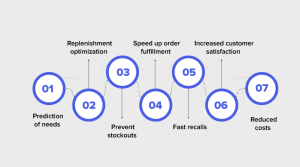
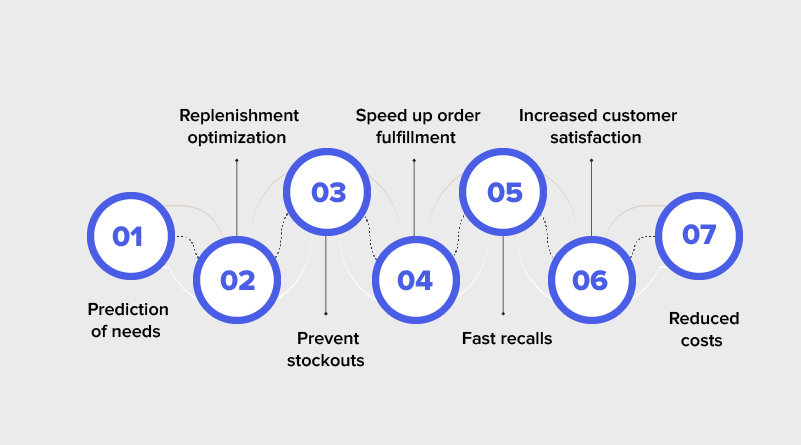
Effective inventory management helps businesses maintain the right balance between product availability and inventory costs.
1. Analyzing Sales Data
Sales data is one of the most valuable sources of information for inventory management.
Retailers can analyze historical sales to understand how individual products perform. For example, a clothing store may discover that certain sizes and colors sell much faster than others.
By studying sales patterns, retailers can make better purchasing decisions and allocate inventory according to actual customer demand.
Sales analytics can also help businesses identify products that generate high revenue but sell in smaller quantities, as well as products that sell frequently but provide lower margins.
2. Improving Demand Forecasting
One of the biggest advantages of data analytics is improved demand forecasting.
Retailers can use historical sales information, seasonal patterns, promotions, holidays, and other business data to estimate future demand.
For example, a retailer selling school supplies may experience higher demand before the start of a new academic year. A fashion retailer may see different demand patterns during summer, winter, and festive shopping periods.
By identifying these patterns, businesses can prepare inventory before demand increases instead of reacting after products become unavailable.
3. Identifying Fast- and Slow-Moving Products
Not every product performs equally.
Data analytics can help retailers divide products into categories such as fast-moving, medium-moving, and slow-moving inventory.
Fast-moving products may require frequent replenishment. Slow-moving products may need promotional offers, discounts, or different purchasing strategies.
This analysis helps retailers understand where their money is being invested and whether certain products are taking up valuable storage space without generating sufficient sales.
4. Optimizing Reorder Points
Retailers need to know when they should reorder products.
Analytics systems can consider current inventory, average sales, supplier lead time, and expected demand to help determine suitable reorder points.
For example, if a product normally sells 20 units per day and a supplier requires several days to deliver new stock, the retailer needs to plan the reorder before inventory reaches zero.
Automated alerts can notify employees when stock reaches a predefined level, reducing the risk of unexpected stockouts.
5. Understanding Seasonal Trends
Retail demand often changes throughout the year.
Data analytics allows retailers to compare sales from different periods and identify seasonal patterns. This can be particularly useful for businesses selling clothing, electronics, gifts, groceries, school products, and festive items.
Instead of ordering the same quantity throughout the year, retailers can adjust purchasing based on expected demand.
Seasonal analytics can also help businesses avoid having large quantities of seasonal products remaining after demand decreases.
6. Analyzing Inventory by Store Location
Retail businesses with multiple stores need to understand how products perform at different locations.
A product that sells quickly in one city may move slowly in another location because customer preferences can differ.
Data analytics can provide store-level inventory information and help businesses determine where products should be stocked.
If one store has excess inventory while another location is running low, the business may be able to transfer products between locations rather than immediately purchasing additional stock.
7. Managing Omnichannel Inventory
Modern retailers may sell through physical stores, websites, mobile applications, marketplaces, and social commerce channels.
Managing inventory across these channels can become complicated if each platform maintains separate information.
A connected inventory system can provide a centralized view of stock. When a product is sold online, the available quantity can be updated across relevant systems.
This helps reduce situations where customers purchase products online that are no longer actually available.
8. Measuring Supplier Performance
Inventory analytics is not only about products and customers. It can also help retailers evaluate suppliers.
Businesses can track factors such as:
- Delivery times
- Order accuracy
- Product quality
- Quantity shortages
- Delayed shipments
- Purchase costs
- Return rates
This information can help retailers understand which suppliers consistently meet business requirements and where supply chain problems may exist.
9. Reducing Overstock and Stockouts
Two common inventory problems are overstocking and stockouts.
Overstocking means a business has more inventory than it can reasonably sell within the expected period. Stockouts occur when products are unavailable when customers want to purchase them.
Analytics helps retailers monitor both situations.
Businesses can use sales trends, inventory levels, demand forecasts, and purchasing history to make better decisions about how much stock to maintain.
The goal is not simply to hold more inventory. The goal is to maintain inventory at an appropriate level for expected demand.
10. Combining AI With Inventory Analytics
Artificial intelligence can make inventory analytics more advanced.
AI-powered systems can analyze large amounts of information and identify patterns that may be difficult to detect manually. Depending on the system, retailers can use AI to support demand forecasting, product recommendations, replenishment planning, and inventory optimization.
For example, an AI system may analyze historical sales, seasonal trends, promotions, and other business information to estimate future demand.
This allows retailers to move from basic reporting toward predictive inventory management.
11. Using Real-Time Inventory Dashboards
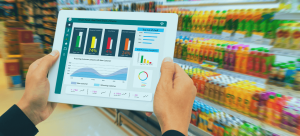
Modern analytics platforms can provide real-time dashboards that display important inventory information in one place.
A dashboard may show:
- Current stock levels
- Low-stock products
- Out-of-stock products
- Sales performance
- Purchase orders
- Inventory value
- Fast-moving products
- Slow-moving products
- Store-level inventory
Managers can use these dashboards to monitor operations without manually checking multiple spreadsheets or systems.
Real-time visibility can also help businesses respond more quickly when unexpected changes occur.
12. How Small Retailers Can Use Data Analytics
Data analytics is not only useful for large retail companies.
Small retailers can also begin with simple tools such as POS reports, ecommerce analytics, inventory management software, and spreadsheets.
The important step is to consistently collect accurate data and use it to answer practical business questions.
A small retailer could start by analyzing its top-selling products, monthly sales patterns, stockouts, and slow-moving inventory. As the business grows, it can gradually adopt more advanced analytics and automation.
Challenges of Inventory Analytics
Although data analytics provides many benefits, retailers also need to address several challenges.
Poor-quality data can lead to inaccurate analysis. If inventory records are not updated correctly, analytics results may not represent the actual stock situation.
Businesses also need to connect different systems, train employees, protect customer and business data, and establish clear processes for using analytics.
Technology alone cannot solve every inventory problem. Retailers still need knowledgeable employees and effective business processes.
The Future of Data-Driven Inventory Management
Inventory management is expected to become increasingly automated and data-driven.
Retailers are moving toward systems that combine inventory management, ecommerce platforms, POS systems, customer data, artificial intelligence, and supply chain information.
Future systems may provide more accurate demand predictions, automated replenishment recommendations, real-time inventory visibility, and faster responses to changes in customer behavior.
The combination of analytics and automation can allow retailers to spend less time manually checking inventory and more time focusing on customers and business growth.
Conclusion
Data analytics is changing the way retailers manage inventory. Instead of relying only on historical records or manual calculations, businesses can use real-time information and predictive insights to make better inventory decisions.
From sales analysis and demand forecasting to supplier monitoring and omnichannel inventory management, analytics can help retailers understand what they need, where they need it, and when they need it.
For businesses looking to improve efficiency, reduce unnecessary inventory costs, and provide better product availability, investing in reliable inventory data and analytics can become an important part of their digital transformation strategy.