Retail businesses are becoming increasingly dependent on technology. Ecommerce websites, point-of-sale systems, mobile applications, cloud platforms, payment gateways, customer databases, and inventory systems all play important roles in modern retail operations.
While technology creates new opportunities, it also introduces cybersecurity risks. Retail businesses handle valuable information, including customer details, account information, transaction records, and business data. Protecting this information is therefore an important part of running a modern retail business.
In 2026, cybersecurity should not be treated as only an IT responsibility. It is an important business requirement that involves technology, employees, customers, and management.
What Is Retail Cybersecurity?
Retail cybersecurity refers to the technologies, processes, and practices used to protect retail businesses from unauthorized access, data breaches, fraud, malware, and other digital threats.
Retailers may need to protect several types of systems, including:
- Ecommerce websites
- POS systems
- Payment platforms
- Customer databases
- Employee accounts
- Cloud applications
- Mobile applications
- Inventory systems
- Internal business networks
A weakness in one system can potentially affect other connected systems, which makes a comprehensive security approach important.
1. Protecting Customer Data
Customer data is one of the most important assets handled by retailers.
Depending on the business, customer information may include names, addresses, email addresses, phone numbers, purchase history, account credentials, and other information.
Retailers should collect only the information they need and protect it appropriately.
Access to sensitive customer information should also be restricted to authorized employees and systems.
Businesses should regularly review what data they collect, where it is stored, and who can access it.
2. Securing Ecommerce Websites
Ecommerce websites are a major part of modern retail.
A compromised website can create financial losses, interrupt business operations, and damage customer trust.
Retailers should keep their ecommerce platforms, plugins, themes, libraries, and server software updated.
Strong administrator passwords and multi-factor authentication can also help protect administrative accounts.
Businesses should regularly monitor their websites for suspicious activity and maintain reliable backups.
3. Protecting POS Systems
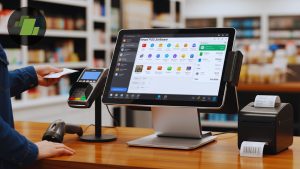
Point-of-sale systems are another important security area.
Modern POS systems may connect to payment processors, inventory systems, customer databases, and other business applications.
Retailers should ensure that POS devices use secure configurations and that employees only have the permissions required for their roles.
Unused accounts should be removed or disabled, and software should be kept up to date.
Physical security is also important. Unauthorized people should not be able to access POS equipment or connected devices.
4. Strong Passwords and Multi-Factor Authentication
Weak passwords remain a common security problem.
Retail businesses should encourage employees to use strong, unique passwords for business accounts.
Multi-factor authentication provides an additional layer of protection by requiring another verification method beyond a password.
For example, an employee may need to enter a password and confirm their identity using an authentication application or another approved method.
MFA can be particularly important for administrator accounts and systems containing sensitive information.
5. Employee Security Awareness
Technology alone cannot provide complete cybersecurity protection.
Employees interact with emails, websites, customer information, payment systems, and business applications every day.
Cybercriminals may attempt to trick employees through phishing emails, fake login pages, malicious attachments, or social engineering.
Regular security awareness training can help employees identify suspicious messages and understand how to report potential security incidents.
Employees should know that they should not share passwords or sensitive business information through unauthorized channels.
6. Payment Security
Payment processing is a critical area for retail businesses.
Retailers should use reputable payment providers and follow applicable payment security requirements.
Payment information should be handled carefully, and businesses should avoid storing sensitive payment information unnecessarily.
Secure payment integrations can reduce the amount of sensitive payment data handled directly by a retailer’s own systems.
Businesses should also monitor transactions for unusual activity where appropriate.
7. Preventing Phishing Attacks
Phishing attacks attempt to trick users into revealing information or performing an action.
For example, an employee may receive an email that appears to come from a manager asking them to open a document or provide login information.
Retail businesses should train employees to verify unexpected requests, especially those involving passwords, payments, or sensitive information.
Email security tools and authentication technologies can also help reduce certain types of phishing risk.
8. Regular Software Updates
Outdated software can contain security vulnerabilities.
Retail businesses often depend on multiple technologies, including operating systems, ecommerce platforms, plugins, POS software, databases, servers, and cloud applications.
Regular updates can help businesses receive security fixes and improvements.
Businesses should maintain an inventory of their software and devices so that important systems are not forgotten during update cycles.
9. Website Backups
Backups are an important part of business continuity.
If a website is compromised, damaged, or affected by a technical problem, a reliable backup can help restore business operations.
Retailers should maintain backups according to their business requirements and test whether those backups can actually be restored.
Backups should also be protected so that attackers cannot easily modify or delete them.
10. Network Security
Retail stores may have multiple connected devices, including POS terminals, computers, printers, cameras, Wi-Fi systems, and other smart devices.
Businesses should properly configure their networks and separate critical systems where appropriate.
Guest Wi-Fi should not automatically provide access to sensitive business systems.
Firewalls, secure wireless configurations, network monitoring, and appropriate access controls can all contribute to stronger security.
11. Cloud Security
Cloud platforms are increasingly common in retail.
Businesses may use cloud-based ecommerce platforms, CRM systems, accounting software, storage services, and POS applications.
Cloud providers typically provide security features, but businesses are still responsible for correctly configuring their accounts and permissions.
Retailers should review user access regularly and enable available security features such as MFA where appropriate.
12. Mobile App Security
Many retailers now provide mobile applications for shopping, loyalty programs, order tracking, and customer service.
Mobile applications can process sensitive information and connect to backend systems.
Businesses should ensure that mobile applications use secure communication and appropriate authentication.
Regular security testing can help identify vulnerabilities before they become larger problems.
13. Monitoring and Threat Detection
Cybersecurity is not only about prevention.
Retail businesses should also monitor systems for unusual activity.
Examples of suspicious activity may include unexpected administrator logins, unusual account behavior, repeated failed login attempts, or unexpected changes to website files.
Security monitoring tools can help businesses identify potential incidents more quickly.
Early detection can reduce the potential impact of a security problem.
14. Creating an Incident Response Plan
Even businesses with strong security controls should prepare for the possibility of an incident.
An incident response plan should explain what employees should do if a security problem occurs.
The plan may include:
- Identifying the incident.
- Limiting affected systems.
- Contacting the appropriate technical team.
- Protecting evidence where necessary.
- Restoring affected services.
- Communicating with relevant stakeholders.
- Reviewing what happened.
Having a plan can reduce confusion during an emergency.
Challenges for Small Retail Businesses
Small businesses may assume that cybersecurity is only necessary for large companies.
However, smaller retailers can also face security risks.
Limited budgets, outdated systems, weak passwords, and lack of employee training can create vulnerabilities.
Small businesses do not necessarily need extremely complex security infrastructure to improve their security.
Basic measures such as MFA, software updates, secure backups, strong passwords, access controls, and employee training can provide an important foundation.
The Future of Retail Cybersecurity
As retail technology becomes more connected, cybersecurity will become increasingly important.
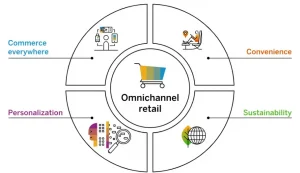
AI, cloud computing, IoT devices, mobile commerce, digital payments, and omnichannel systems create new opportunities but also increase the number of systems that businesses need to protect.
Retailers will need to treat cybersecurity as an ongoing process rather than a one-time project.
Regular monitoring, employee training, software updates, security testing, and access reviews should become part of normal business operations.
Conclusion
Cybersecurity is an essential part of modern retail.
Retail businesses handle customer information, payment transactions, business data, and connected digital systems, making security an important operational responsibility.
By using strong authentication, secure payment systems, updated software, reliable backups, employee training, network protection, and appropriate monitoring, retailers can create a stronger security foundation.
The most effective cybersecurity strategy is not based on a single tool. It combines technology, processes, employee awareness, and continuous monitoring.
As retail continues to become more digital, protecting customer and business information will remain an important part of building reliable and trustworthy retail operations.