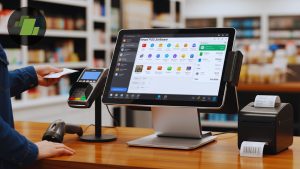
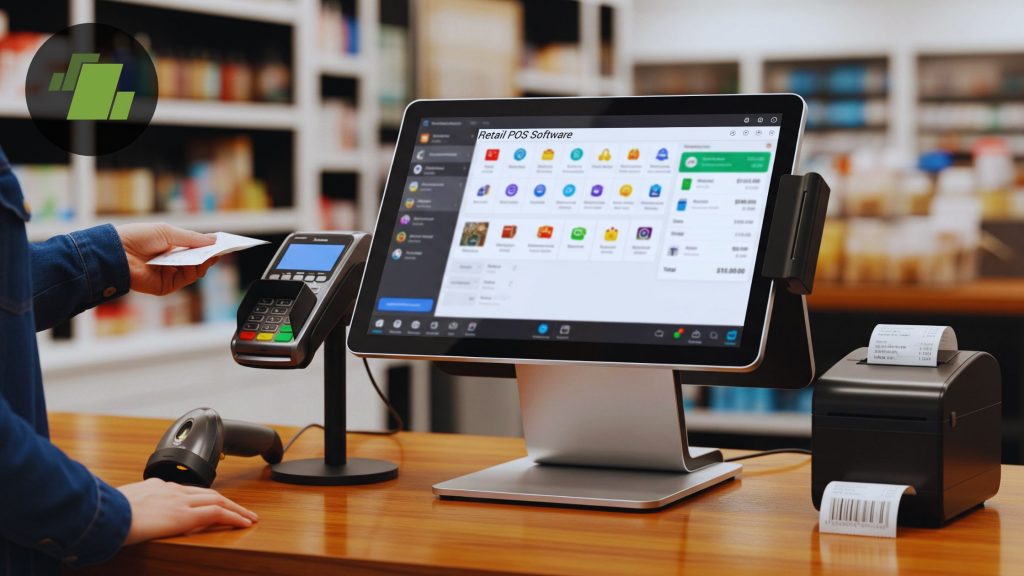
Point-of-sale systems have always been an important part of retail businesses. Traditionally, a POS system was mainly used to process customer payments and generate receipts. However, modern technology has transformed the role of POS systems.
In 2026, smart POS systems can connect payments, inventory, customer information, sales reporting, loyalty programs, and other business operations through a single technology ecosystem.
For retailers, this means a POS system can become much more than a billing machine. It can act as an important source of operational data and help businesses make faster and more informed decisions.
What Is a Smart POS System?
A smart POS system is a modern point-of-sale solution that combines payment processing with business management features.
Depending on the system, it may include:
- Sales management
- Inventory tracking
- Customer management
- Employee management
- Digital receipts
- Loyalty programs
- Sales analytics
- Payment processing
- Product management
- Ecommerce integration
Unlike traditional cash registers, smart POS systems can connect with cloud-based software and other business platforms.
This allows retailers to manage different aspects of their operations from connected systems.
1. Faster Checkout Experiences
One of the most noticeable benefits of smart POS systems is faster checkout.
Modern customers expect quick and convenient payment experiences. Smart POS systems can support multiple payment methods, including cards, digital wallets, QR-based payments, and other electronic payment options.
Businesses can also use barcode scanners and integrated product catalogs to speed up billing.
Faster checkout can help reduce queues, particularly during busy periods.
2. Real-Time Inventory Management
Inventory management is a major challenge for retailers.
When inventory is managed manually, businesses can struggle to maintain accurate information about available stock.
A smart POS system can automatically update inventory when a product is sold.
For example, if a store sells five units of a particular product, the inventory system can update the available quantity.
When connected with an ecommerce platform, this information can also help synchronize stock across online and offline channels.
3. Better Sales Reporting
Smart POS systems can collect detailed sales information.
Retailers can analyze data such as:
- Daily sales
- Weekly sales
- Monthly revenue
- Best-selling products
- Slow-moving products
- Average order value
- Sales by employee
- Sales by location
- Payment methods
These reports can help business owners understand how their stores are performing.
Instead of relying entirely on manual calculations, managers can access reports through digital dashboards.
4. Cloud-Based Retail Management
Many modern POS systems use cloud technology.
Cloud-based POS systems allow authorized users to access business information through connected devices.
For example, a business owner may be able to check sales information from a laptop or smartphone while away from the store.
Cloud technology can also make it easier to manage multiple locations from a central system.
A retailer with several stores can potentially monitor sales and inventory information without checking every location manually.
5. Connecting Online and Offline Stores
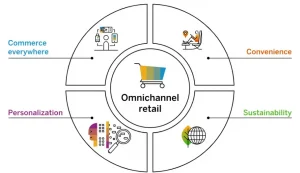
Smart POS systems can play an important role in omnichannel retail.
Retail businesses increasingly sell products through physical stores and ecommerce websites.
When these systems are connected, businesses can synchronize product, inventory, and order information.
For example, a customer may purchase a product online and choose to collect it from a physical store.
The POS and ecommerce systems need to communicate with each other to support this type of operation.
6. Customer Relationship Management
Modern POS systems can also support customer management.
Retailers can store customer information and purchase history, depending on the system and applicable privacy requirements.
This information can help businesses understand purchasing patterns and provide more relevant customer experiences.
For example, a retailer could identify customers who regularly purchase a particular category of products and provide them with relevant updates or offers.
Businesses should ensure that customer information is collected, stored, and used responsibly.
7. Loyalty Programs
Customer loyalty programs can be integrated with smart POS systems.
When customers make purchases, the system can automatically record eligible transactions and update loyalty points or rewards.
Customers can then use these rewards during future purchases.
Digital loyalty programs can reduce the need for physical loyalty cards and provide businesses with additional information about customer engagement.
8. Multiple Payment Options
Payment technology has changed significantly in recent years.
Customers now expect businesses to offer convenient payment methods.
Smart POS systems can support different options depending on the payment provider and region.
These may include:
- Debit and credit cards
- Mobile wallets
- QR payments
- Contactless payments
- Online payment integrations
Providing multiple payment options can make checkout more convenient for different types of customers.
9. Employee Management
Some smart POS platforms include employee management features.
Businesses can use these systems to monitor sales activity, manage staff permissions, and assign different access levels.
For example, a cashier may only have access to billing functions, while a manager may have access to reports and inventory controls.
Permission-based access can also help businesses reduce unauthorized changes to important information.
10. AI and Smart POS Systems
Artificial Intelligence is beginning to expand the capabilities of retail POS technology.
AI can analyze sales information and identify patterns that may be useful to retailers.
For example, an AI-powered system may identify products that are selling faster than expected or detect changes in customer purchasing patterns.
AI can also support forecasting and recommendations.
However, AI-generated insights should be reviewed within the context of the business rather than treated as automatic decisions in every situation.
11. Better Inventory Forecasting
Smart POS systems generate valuable sales data that can support inventory forecasting.
Retailers can analyze historical sales patterns and identify products that may require additional stock.
For example, if a product consistently sells faster during a particular season, the business can plan inventory accordingly.
When combined with other information such as supplier lead times and current stock levels, sales data can contribute to better inventory planning.
12. Managing Multiple Retail Locations
Businesses with multiple stores often face challenges when managing sales and inventory information.
A connected POS system can provide centralized visibility.
Managers can compare performance between locations, review inventory levels, and identify products that may need to be transferred between stores.
Centralized management can reduce the need for manual reporting from individual locations.
Security Considerations
Because POS systems handle payment and customer information, security is extremely important.
Retailers should use trusted payment providers and maintain appropriate security practices.
Businesses should also control employee access, keep software updated, use secure networks, and regularly review system permissions.
Customer and payment information should be protected according to applicable laws, industry requirements, and the policies of relevant payment providers.
Challenges of Implementing Smart POS
Although smart POS systems offer many benefits, implementation requires planning.
Businesses need to consider hardware compatibility, software costs, internet connectivity, employee training, data migration, and integration with existing systems.
Employees may also need time to become familiar with new workflows.
Retailers should evaluate their actual business requirements before selecting a POS solution.
A small store may not require the same features as a large multi-location retailer.
How to Choose the Right POS System
Before choosing a smart POS system, retailers should consider several factors.
First, identify the features the business actually needs.
These may include inventory management, ecommerce integration, customer management, loyalty programs, reporting, and payment support.
Businesses should also consider scalability. A system that works for one store should ideally be capable of supporting future growth if additional locations are planned.
Integration capabilities are also important because the POS may need to connect with ecommerce platforms, accounting software, CRM systems, or other business applications.
The Future of Smart POS
POS technology will continue to evolve as retailers adopt cloud computing, AI, automation, mobile technology, and connected commerce platforms.
Future POS systems may become increasingly integrated with inventory, customer experience, marketing, ecommerce, and business intelligence tools.
The POS terminal itself may become only one part of a much larger retail technology ecosystem.
Conclusion
Smart POS systems are changing the role of point-of-sale technology in modern retail.
Instead of simply processing payments, today’s POS platforms can help retailers manage inventory, understand sales, connect online and offline stores, manage customers, support loyalty programs, and analyze business performance.
For retailers, the right POS system can provide a central foundation for more connected and efficient operations.
As retail technology continues to develop, smart POS systems are likely to become increasingly important for businesses looking to modernize their stores and provide faster, more connected shopping experiences.