Master the Future of Search: How to Position Your Brand for AI-Powered Discovery
The landscape of online discovery is undergoing a seismic shift. Large Language Models (LLMs) like ChatGPT, Claude, Gemini, and Perplexity are fundamentally changing how consumers find, research, and purchase products. Traditional search engine optimization (SEO) focused on ranking in Google. Today, e-commerce brands must optimize for how AI systems understand, retrieve, and recommend their products.
This comprehensive guide reveals how to position your e-commerce brand for maximum visibility in the age of artificial intelligence, ensuring your products appear when AI assistants make recommendations to millions of users worldwide.
Understanding LLM Optimization: The New Search Paradigm
LLM optimization represents the evolution of search visibility. While traditional SEO focused on keywords and backlinks, LLM optimization centers on semantic understanding, contextual relevance, and authoritative content that AI systems can confidently cite and recommend.
Why LLM Optimization Matters for E-Commerce
Consider these transformative statistics:
- Over 100 million people now use ChatGPT weekly for product research and recommendations
- AI-powered search experiences are projected to account for 50% of all search queries by 2026
- Consumers trust AI recommendations at rates comparable to recommendations from friends and family
- E-commerce brands appearing in LLM responses see 3-5x higher conversion rates than traditional search traffic
When potential customers ask an AI assistant for product recommendations in your category, will your brand be mentioned? LLM optimization ensures you are part of the conversation.
How LLMs Discover and Understand E-Commerce Brands
Understanding how AI systems process information about your brand is fundamental to optimization. LLMs create knowledge through multiple pathways:
Training Data and Knowledge Cutoffs
LLMs are trained on vast amounts of internet text data up to a specific cutoff date. Information published before this date becomes part of the model’s inherent knowledge. For your brand to be known by the AI itself, you need substantial, authoritative content published well before training cutoffs. This means building brand mentions, reviews, and discussions across reputable platforms over time.
Real-Time Web Search Integration
Most modern LLMs now integrate web search capabilities to access current information beyond their training data. When users ask about products, these systems search the web in real-time and synthesize results. Your optimization goal is to ensure your brand appears prominently in these search results with clear, structured, and compelling information that AI systems can easily interpret and cite.
Retrieval-Augmented Generation (RAG)
Advanced AI systems use RAG to pull specific, relevant information from proprietary databases and indexed content. This creates opportunities for e-commerce brands to provide structured product data, specifications, and use cases that AI systems retrieve when generating recommendations. Think of this as creating an AI-readable product catalog that systems can confidently reference.
Core Strategies for LLM Optimization
1. Semantic Content Architecture
Create content that explains not just what your products are, but how they solve problems, who they’re for, and why they matter. LLMs excel at understanding context and intent.
Practical Implementation:
- Develop comprehensive buying guides that address specific use cases and customer needs
- Write detailed product descriptions that include materials, dimensions, ideal users, and problem-solving capabilities
- Create comparison content that positions your products against alternatives while maintaining objectivity
- Structure information hierarchically with clear headings, subheadings, and topical organization
Example: Instead of ‘Premium Yoga Mat,’ write ‘Extra-Thick Premium Yoga Mat for Joint Support: Ideal for Practitioners with Knee Pain or Beginning Yogis Seeking Maximum Cushioning.’ The semantic richness helps AI systems understand exactly when to recommend your product.
2. Authoritative Brand Presence
LLMs prioritize information from authoritative, trustworthy sources. Build your brand’s authority across the digital ecosystem.
Authority-Building Tactics:
- Earn mentions in reputable publications, industry blogs, and news sites relevant to your niche
- Cultivate authentic customer reviews on trusted platforms like Amazon, Trustpilot, and Google Reviews
- Publish expert content, research, or thought leadership that establishes domain expertise
- Secure features in product roundups, best-of lists, and editorial recommendations
- Maintain accurate, comprehensive listings on Wikipedia, Wikidata, and industry databases
3. Structured Data Implementation
Make your product information machine-readable through proper structured data markup. This helps AI systems accurately extract and understand product details.
Essential Schema Markup:
- Product schema with comprehensive attributes (name, description, price, availability, ratings)
- Review and rating schema to showcase customer feedback
- FAQ schema for common product questions and answers
- Breadcrumb schema for clear site hierarchy
- Organization schema with brand details and social profiles
4. Natural Language Optimization
Write content the way people actually speak and ask questions. LLMs are trained on conversational patterns and respond best to natural language.
Conversational Content Strategies:
- Answer questions in complete, detailed sentences rather than fragments
- Use question-and-answer formats that mirror how customers actually inquire about products
- Include context and explanations, not just specifications
- Write in a helpful, informative tone that provides genuine value rather than pure marketing speak
5. Multi-Platform Content Distribution
LLMs draw from diverse sources. Your brand should have a consistent, informative presence across multiple platforms.
Strategic Platform Presence:
- Maintain detailed product listings on major marketplaces (Amazon, eBay, Walmart)
- Create informative content on Reddit, Quora, and industry forums where people ask for recommendations
- Publish on Medium, LinkedIn Articles, and your own blog
- Develop YouTube videos and podcasts that discuss your products in educational contexts
- Ensure consistent NAP (Name, Address, Phone) information across all platforms
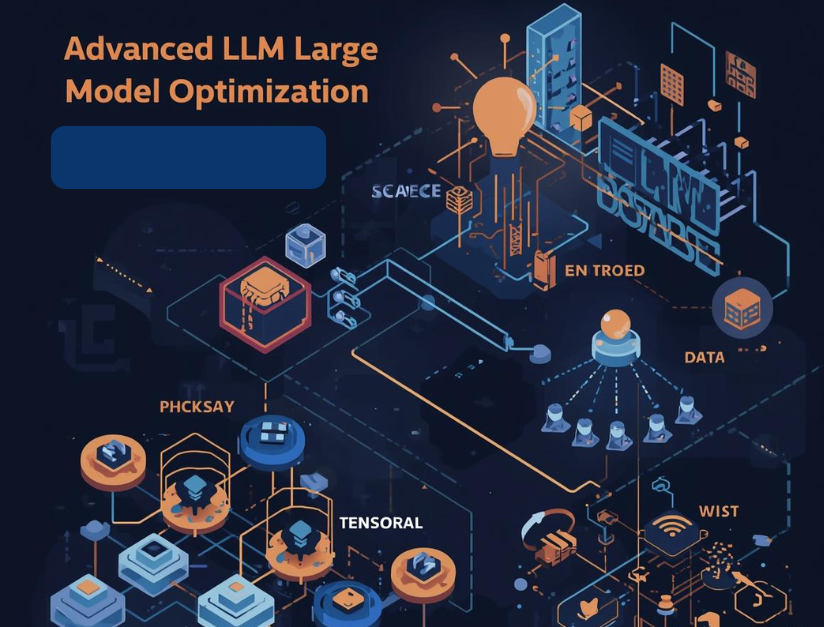
Advanced LLM Optimization Techniques
Entity-Based SEO
LLMs understand the world through entities and their relationships. Optimize your brand as a distinct entity with clear attributes, connections, and expertise areas. Establish your products as entities linked to specific problems, use cases, and customer segments. Build relationships between your brand entity and related concepts, industries, and complementary products.
Contextual Relevance Mapping
Create content that positions your products within multiple relevant contexts. A running shoe isn’t just footwear; it’s relevant to marathon training, injury prevention, pronation correction, and beginning fitness journeys. The more contexts in which your product naturally appears in authoritative content, the more scenarios in which AI systems will recommend it.
Citation-Worthy Content Development
LLMs cite sources when providing recommendations. Create content that’s genuinely citation-worthy through original research, comprehensive guides, expert analysis, and data-driven insights. When your content becomes the definitive resource on a topic, AI systems naturally reference it when answering related queries.
Prompt-Aware Content Strategy
Understand common prompt patterns in your category. Research how customers ask AI assistants for product recommendations. Create content that directly addresses these inquiry patterns. If customers ask ‘What’s the best eco-friendly water bottle for hiking?’ ensure your content explicitly answers this exact question with clear, confident recommendations supported by reasoning.
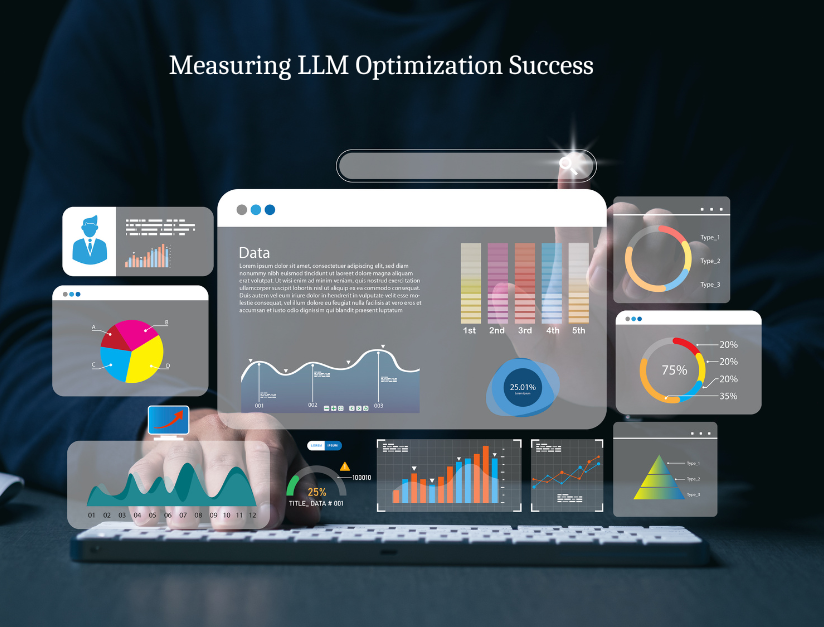
Measuring LLM Optimization Success
Traditional analytics don’t capture AI-driven discovery. Implement these measurement approaches to track your LLM optimization efforts:
Brand Mention Tracking
Regularly test AI assistants with relevant queries to see if your brand appears in recommendations. Document:
- Which queries trigger your brand mentions
- Position in recommendation lists (first, second, third, etc.)
- Accuracy of product descriptions in AI responses
- Sentiment and context of mentions
Traffic Source Analysis
Monitor referral traffic from AI-powered platforms:
- Perplexity.ai citations and traffic
- ChatGPT browsing referrals
- Google SGE (Search Generative Experience) impressions
- Bing Chat driven visits
Conversion Quality Metrics
Track not just volume but quality of AI-driven traffic. Users arriving from LLM recommendations often show higher intent, better product fit, and superior conversion rates. Segment this traffic and analyze purchase behavior, average order value, and customer lifetime value compared to traditional channels.
Competitive Visibility Benchmarking
Test queries where you compete directly with other brands. Track relative mention frequency, positioning, and the specific differentiators AI systems highlight when comparing products. This reveals both opportunities and areas where competitors have stronger AI visibility.
Common LLM Optimization Mistakes to Avoid
Over-Optimization and Keyword Stuffing
LLMs detect and penalize unnatural language patterns. Write for humans first, ensuring your content reads naturally and provides genuine value. AI systems reward authenticity and penalize manipulative tactics.
Ignoring Source Quality
A single mention in a highly authoritative publication carries more weight than dozens of mentions on low-quality sites. Focus on earning presence in respected sources rather than pursuing volume of weak mentions.
Inconsistent Information Across Platforms
When AI systems find conflicting information about your products, prices, or specifications across different sources, they become less confident in recommending you. Maintain consistency in all product information, pricing, and brand messaging across every platform.
Neglecting Negative Signals
Unaddressed negative reviews, unresolved complaints, or problematic press coverage influence AI recommendations. Actively manage your reputation, respond to criticism constructively, and work to resolve issues that create negative signals in the data AI systems access.
Static Content Strategies
AI systems increasingly access current information through web search. Regularly update your content, publish fresh perspectives, and ensure your information stays current. Stale, outdated content signals to AI systems that your brand may not be actively relevant.
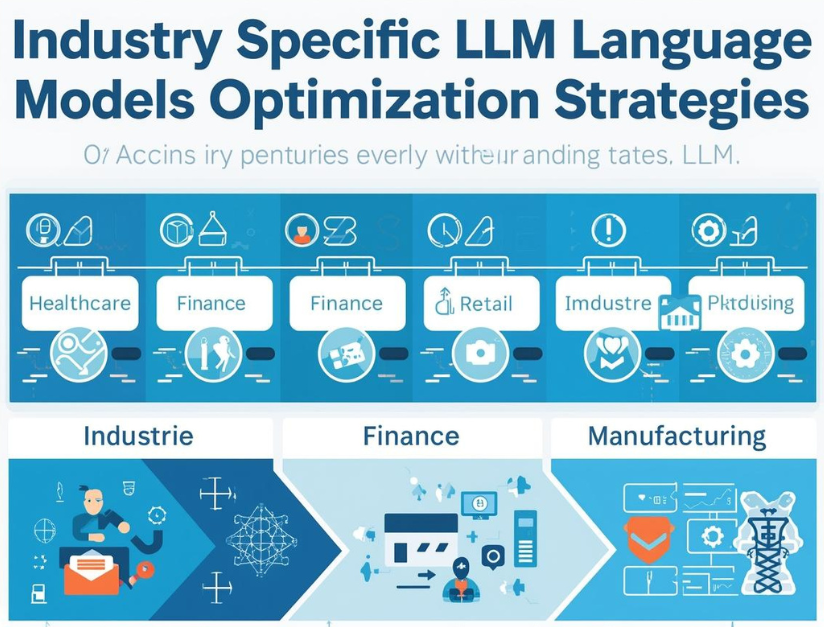
Industry-Specific LLM Optimization Strategies
Fashion and Apparel
Create detailed style guides, fit information, and use-case scenarios. Describe fabrics, construction quality, and ideal body types or occasions. Include size charts with detailed measurements and fit notes. Develop content around fashion advice that naturally mentions your products as solutions.
Electronics and Technology
Provide comprehensive technical specifications, compatibility information, and performance benchmarks. Create comparison content between models and generations. Address common technical questions and troubleshooting scenarios. Include information about software updates, warranty coverage, and technical support.
Home and Garden
Develop room-specific buying guides and space planning content. Include dimensional information, assembly requirements, and maintenance guidance. Create seasonal content and project ideas that feature your products. Provide style inspiration and decorating advice that positions your items as solutions.
Health and Beauty
Clearly communicate ingredient lists, benefits, and skin/hair type suitability. Create educational content about ingredients and formulation science. Address safety, allergen, and cruelty-free information transparently. Develop routines and regimens that incorporate your products with clear usage instructions.
Food and Beverage
Provide detailed nutritional information, ingredient sourcing, and preparation methods. Create recipe content and pairing suggestions. Address dietary restrictions, allergens, and certifications clearly. Include storage instructions and shelf life information. Develop taste profiles and comparison content.
The Future of LLM Optimization
As AI technology evolves, optimization strategies will continue advancing. Several emerging trends will shape the next phase of LLM optimization for e-commerce:
Multimodal AI Understanding
Next-generation AI systems will analyze images, videos, and text simultaneously. Optimize product photography with descriptive file names, alt text, and surrounding context. Create video content that demonstrates products clearly while providing verbal descriptions AI can transcribe and understand.
Personalized AI Shopping Assistants
AI assistants will remember user preferences and purchase history to provide increasingly personalized recommendations. Ensure your product information includes detailed attributes that enable precise matching to individual customer needs and preferences.
Voice Commerce Integration
Voice-activated AI shopping will expand significantly. Optimize for natural spoken queries and ensure product names are easily pronounceable and distinctive. Create content that answers voice-friendly questions concisely and clearly.
Real-Time Inventory and Pricing Integration
AI systems will increasingly access live inventory and pricing data to provide current, actionable recommendations. Implement structured data feeds that AI platforms can query directly for real-time product availability and pricing information.
Implementing Your LLM Optimization Strategy
Success requires systematic implementation. Follow this roadmap to build comprehensive LLM optimization into your e-commerce operations:
Phase 1: Foundation (Months 1-2)
- Audit existing content for semantic richness and natural language quality
- Implement comprehensive structured data markup across all product pages
- Establish baseline measurements for current AI visibility
- Identify key queries and prompts relevant to your products
Phase 2: Content Enhancement (Months 3-4)
- Rewrite product descriptions with semantic optimization principles
- Create comprehensive buying guides and educational content
- Develop FAQ sections addressing common customer questions
- Produce comparison and recommendation content
Phase 3: Authority Building (Months 5-8)
- Pursue features in relevant publications and product roundups
- Build review presence on authoritative platforms
- Create thought leadership content demonstrating expertise
- Establish presence across relevant platforms and communities
Phase 4: Optimization and Refinement (Ongoing)
- Regularly test AI visibility with target queries
- Analyze traffic and conversion data from AI sources
- Refine content based on performance insights
- Update information to maintain currency and relevance
- Adapt strategy as AI technology and user behavior evolve

Conclusion: Embracing the AI-Powered Future
LLM optimization represents a fundamental shift in how e-commerce brands achieve visibility and drive sales. The transition from traditional search to AI-powered discovery is accelerating, and brands that optimize now will establish competitive advantages that compound over time.
Success doesn’t require abandoning existing SEO and marketing strategies. Rather, LLM optimization builds upon these foundations, extending your reach into the rapidly growing space of AI-mediated commerce. The brands winning in this new paradigm share common characteristics: comprehensive, authoritative content; consistent, accurate information across platforms; genuine value creation for customers; and systematic optimization for semantic understanding.
Start with the fundamentals outlined in this guide. Implement structured data, enhance content quality, build authority, and measure results. As you gain experience and insight, advance to more sophisticated techniques like entity-based optimization and citation-worthy content development.
The future of e-commerce discovery is here. Millions of potential customers are already asking AI assistants for product recommendations every day. The question isn’t whether to optimize for LLMs, but how quickly you can position your brand to capture this massive and growing opportunity.
FAQS
LLM optimization is the practice of making your e-commerce brand discoverable by AI assistants like ChatGPT, Claude, and Gemini. It involves creating semantic-rich content, implementing structured data, and building authority so AI systems confidently recommend your products when users ask for shopping advice.
Traditional SEO focuses on keywords and rankings in search results. LLM optimization emphasizes natural language, semantic understanding, and contextual relevance. AI systems recommend products based on how well they match user needs, not keyword density or backlinks.
Focus on ChatGPT, Claude, Gemini, Perplexity AI, Microsoft Copilot, and Google’s SGE. The good news is optimization strategies work across all platforms since they rely on similar principles: quality content, structured data, and authoritative sources.
Basic improvements can appear within 2-4 weeks after implementing structured data and content updates. Significant visibility gains typically emerge within 3-6 months as your authority builds and AI systems index your enhanced information.
Basic optimization requires writing and marketing skills, not coding. However, implementing structured data may need developer help or using e-commerce platform plugins. The most important part is creating helpful, comprehensive content.
Test AI assistants regularly with product queries to see if your brand appears. Monitor referral traffic from AI platforms in analytics. Track conversion rates from AI-driven traffic. Measure which queries trigger your brand recommendations and your position in results.