
Artificial intelligence is transforming the way search engines understand information on the internet. In the past, search engines mostly relied on matching keywords to determine which pages should appear in search results. Today, AI allows search engines to understand topics, context, and the meaning behind search queries.
This shift has changed how content should be created and optimized. Instead of focusing only on individual keywords, modern SEO requires a deeper understanding of topics and how different pieces of information connect with each other.
By understanding how AI interprets topics, businesses and content creators can produce more useful content that performs better in search results.
The Shift from Keywords to Topics
Years ago, SEO strategies were heavily focused on keywords. Websites tried to rank by repeating specific keywords throughout their content. While keywords are still important, search engines have become much more sophisticated.
AI systems now analyze the overall meaning of content. They look at how different words relate to each other and whether the content truly answers a user’s question.
For example, if someone searches for “how to improve website speed,” AI understands that the user may be looking for information about page loading time, website performance, image optimization, or caching. Even if the exact phrase is not repeated many times, content covering these related ideas can still rank well.
Natural Language Understanding

One of the most important ways AI understands topics is through natural language processing. This technology allows machines to interpret human language in a way that is closer to how people understand conversations.
Instead of simply scanning for keywords, AI examines the relationships between words and phrases. It analyzes sentence structure, context, and meaning.
This helps search engines deliver results that better match the user’s intent, even when the search query is complex or conversational.
Context and Meaning
AI also considers the context of a topic. Words can have different meanings depending on how they are used.
For example, the word “apple” could refer to a fruit or a technology company. AI systems analyze surrounding words and overall content context to determine which meaning is correct.
This ability allows search engines to provide more accurate search results.
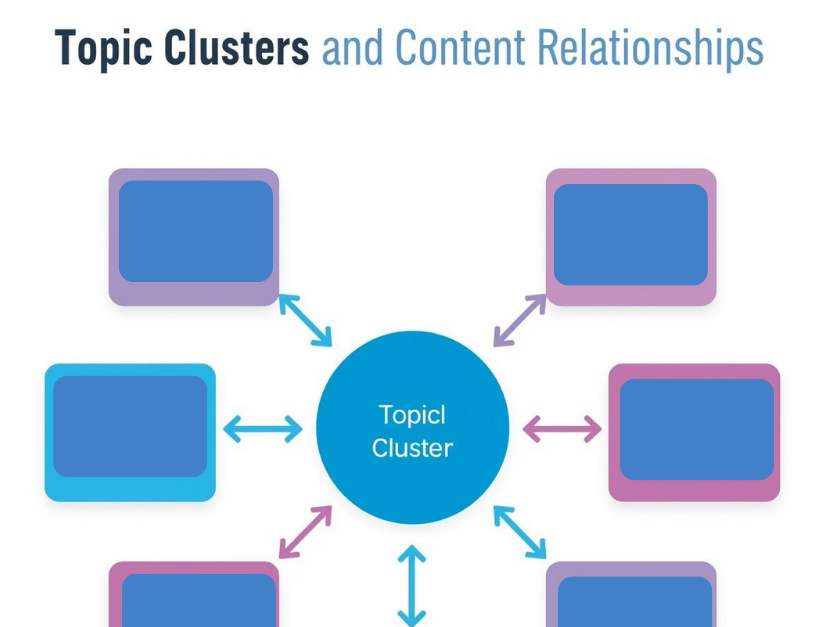
Topic Clusters and Content Relationships
AI also looks at how topics are connected across a website. Websites that cover related subjects in depth are often seen as more authoritative.
For example, a website about digital marketing may publish content on SEO, social media marketing, email marketing, and online advertising. These related topics help search engines understand the overall focus of the website.
When content is organized into topic clusters, it becomes easier for AI to recognize the expertise of a website in a particular field.
User Intent and Search Behavior
Another important factor is understanding user intent. AI studies how people search, what results they click on, and how they interact with different pages.
This information helps search engines learn which types of content best satisfy users’ needs.
If users frequently click on certain pages and spend time reading them, it signals that the content is useful. Over time, these signals help AI improve search result rankings.
The Role of Structured Information
Structured information also helps AI understand topics more clearly. When websites organize content with clear headings, categories, and well-structured pages, it becomes easier for search engines to interpret the topic.
Simple practices like using descriptive headings and logical content structure can help AI analyze content more effectively.
What This Means for SEO
As AI continues to evolve, SEO strategies must focus more on meaning and usefulness rather than just keywords.
Content creators should aim to:
- Cover topics comprehensively
- Write naturally for readers
- Answer common questions clearly
- Organize content logically
This approach helps search engines understand your content better and increases the chances of appearing in search results.
Final Thoughts
Artificial intelligence has changed how search engines evaluate content. Instead of relying only on keywords, AI systems now analyze context, topic relationships, and user intent.
For website owners and marketers, this means focusing on creating meaningful content that truly helps readers. When content clearly explains a topic and provides useful information, AI can easily understand its value.
By aligning content with real user needs, websites can build stronger visibility and authority in search results.
FAQS
When AI understands topics, it analyzes the meaning, context, and relationship between words instead of focusing only on specific keywords. This helps search engines deliver more accurate and relevant search results.
AI studies the content structure, headings, keywords, related terms, and overall context of a page. By analyzing these elements, it can determine what the page is mainly about.
Topic-based SEO helps search engines understand your website’s expertise in a subject. When you cover a topic in depth with multiple related articles, it improves your chances of ranking higher in search results.
No, keywords are still important. However, AI now focuses more on the overall meaning of content rather than exact keyword repetition.
You can optimize content by writing clearly, covering topics in depth, using related keywords naturally, and structuring content with headings and logical sections.
User intent helps AI understand what the searcher really wants to find. AI analyzes search behavior and content relevance to deliver results that best match the user’s needs.