Technology has become an essential part of modern retail operations. Ecommerce websites, point-of-sale systems, inventory management, customer relationship management, payment processing, analytics, and marketing platforms all depend on reliable digital infrastructure.
Cloud computing has played an important role in making these technologies more accessible to retail businesses.
Instead of relying entirely on physical servers and locally installed software, businesses can use cloud-based infrastructure and applications that are accessed through the internet. This can provide retailers with greater flexibility, easier collaboration, and the ability to scale technology as their operations grow.
In 2026, cloud computing is increasingly connected with other retail technologies such as Artificial Intelligence, data analytics, automation, and omnichannel commerce.
What Is Cloud Computing?
Cloud computing refers to using computing resources such as servers, storage, databases, networking, and software through internet-based services.
Instead of purchasing and maintaining all infrastructure themselves, businesses can use cloud providers and cloud-based software according to their requirements.
For retailers, cloud technology can support many different business functions.
These may include:
- Ecommerce
- Inventory management
- Customer relationship management
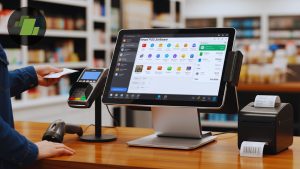
- POS systems
- Accounting
- Data analytics
- Marketing
- File storage
- Business applications
1. Lower Infrastructure Requirements
Traditional IT infrastructure can require businesses to purchase physical servers, networking equipment, storage devices, and other hardware.
These systems also require maintenance and upgrades.
Cloud computing can reduce the need for businesses to manage all infrastructure themselves.
Retailers can use cloud services according to their requirements and scale resources as their business changes.
This can be particularly useful for small and medium-sized businesses that may not have large internal IT teams.
2. Supporting Ecommerce
Ecommerce websites need reliable infrastructure because customers can access them at any time.
Cloud hosting can provide infrastructure for websites, databases, images, applications, and other ecommerce components.
During periods of increased traffic, businesses may need additional resources to maintain website performance.
Cloud-based infrastructure can provide different scaling options depending on the platform and configuration.
This can help retailers prepare for seasonal events, promotional campaigns, and other periods of increased demand.
3. Real-Time Inventory Management
Inventory information is critical for modern retailers.
Cloud-based inventory systems can allow authorized employees and connected applications to access updated inventory information.
For example, a retailer selling through both physical stores and an ecommerce website can connect inventory information across these channels.
When a product is sold, the relevant system can update the available quantity.
This can help reduce discrepancies between online and offline inventory.
4. Connecting Multiple Retail Locations
Cloud technology can be particularly useful for businesses with multiple stores.
Instead of maintaining completely separate infrastructure at every location, businesses can connect stores to centralized cloud-based systems.
Managers can access relevant information about sales, inventory, and operations from different locations.
This can simplify centralized reporting and management.
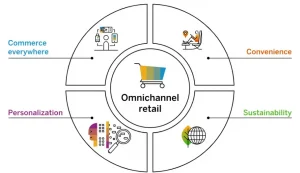
5. Supporting Omnichannel Retail
Omnichannel retail requires multiple systems to communicate with one another.
A retailer may need to connect:
- Ecommerce
- POS
- Inventory
- CRM
- Marketing
- Customer support
- Logistics
Cloud platforms can provide infrastructure and integration capabilities for these systems.
When data is properly synchronized, customers can move between online and offline channels more easily.
6. Data Storage and Accessibility
Retail businesses generate large amounts of data.
This can include product information, sales records, customer interactions, marketing reports, and operational information.
Cloud storage allows businesses to store and access data through authorized devices.
Employees in different locations can collaborate without depending entirely on local storage.
Businesses should still use appropriate access controls and security measures to protect cloud data.
7. Cloud-Based CRM
Customer relationship management systems are increasingly cloud-based.
A cloud CRM can allow authorized employees to access customer information, communication history, sales activity, and other relevant information.
For retailers, this can support customer service and marketing operations.
For example, a customer service employee may be able to access relevant customer information while handling a support request.
8. Cloud Analytics
Retailers need data to make informed business decisions.
Cloud-based analytics platforms can process large datasets and provide dashboards and reports.
Businesses can analyze information such as:
- Sales trends
- Product performance
- Customer behavior
- Inventory levels
- Marketing results
- Store performance
When analytics systems are connected to other retail platforms, businesses can obtain a more complete view of their operations.
9. AI and Cloud Computing
Artificial Intelligence often requires significant computing resources.
Cloud platforms can provide access to computing infrastructure that supports AI applications.
Retail businesses can use cloud-based AI services for applications such as customer service, recommendation systems, forecasting, content generation, and data analysis.
This means businesses may not need to build all AI infrastructure themselves.
Cloud services can make advanced technologies more accessible to organizations with different levels of technical resources.
10. Improving Collaboration
Retail operations often involve multiple departments and locations.
Marketing teams, store managers, inventory teams, customer service representatives, and management may all need access to shared information.
Cloud-based applications can allow authorized employees to work with the same data and systems.
This can reduce dependence on manually shared files and improve collaboration between teams.
11. Software Updates
Traditional software often requires businesses to install updates manually.
Many cloud-based software services are updated by the service provider.
This can make it easier for businesses to access new features and security improvements.
However, retailers should still understand how updates are managed and whether changes could affect existing integrations or workflows.
12. Business Continuity and Backup
Cloud technology can support business continuity strategies.
Retail businesses can use cloud-based backup and recovery services to protect important data.
If a local computer or device fails, authorized employees may still be able to access information stored in the cloud.
However, cloud storage should not automatically be considered a complete backup strategy. Businesses should understand their provider’s backup policies and maintain additional protections where necessary.
Security and Cloud Computing
Security is an important consideration when moving retail systems to the cloud.
Businesses should carefully manage user permissions and access.
Multi-factor authentication, encryption, secure configurations, monitoring, and regular security reviews can all contribute to stronger protection.
Retailers should also understand the shared responsibility model used by their cloud provider.
The provider may secure the underlying infrastructure, while the customer remains responsible for areas such as account configuration, user access, and data management.
Challenges of Cloud Adoption
Cloud computing provides many benefits, but implementation can also create challenges.
Retailers may need to migrate existing data, integrate older systems, train employees, and redesign certain workflows.
Internet connectivity can also become important when businesses depend heavily on cloud-based systems.
Cost management is another consideration. Cloud services are often flexible, but businesses should monitor usage to avoid unnecessary expenses.
How Small Retail Businesses Can Use Cloud Technology
Small businesses can adopt cloud technology gradually.
For example, a retailer might start with:
- Cloud-based accounting.
- Cloud POS software.
- Online inventory management.
- Cloud CRM.
- Secure cloud storage.
- Ecommerce hosting.
- Cloud analytics.
Businesses can then add additional services as their requirements grow.
The objective should be to solve specific operational problems rather than adopting technology simply because it is cloud-based.
The Future of Cloud Computing in Retail
Cloud computing will continue to provide an important foundation for retail technology.
As AI, analytics, automation, ecommerce, and connected devices become more common, retailers will need flexible infrastructure that can support these technologies.
Cloud platforms can provide the computing resources and integration capabilities required for increasingly connected retail operations.
Conclusion
Cloud computing has changed how retail businesses manage technology.
From ecommerce and inventory management to CRM, analytics, AI, and omnichannel commerce, cloud-based platforms can help retailers connect different parts of their operations.
For businesses of all sizes, cloud technology can provide flexibility and access to modern digital tools without requiring every organization to maintain extensive physical infrastructure.
However, successful cloud adoption requires careful planning, security controls, cost management, and reliable integration.
As retail continues to become more digital, cloud computing will remain an important foundation for modern retail businesses.