Retail stores are becoming increasingly connected as businesses adopt technologies that can collect information, automate processes, and improve customer experiences. One of the technologies contributing to this transformation is the Internet of Things (IoT).
IoT connects physical devices to digital systems so they can collect and exchange information. In retail, this can include smart shelves, sensors, connected cameras, electronic price displays, inventory devices, and other connected equipment.
When combined with cloud computing, AI, and data analytics, IoT can help retailers gain better visibility into store operations and inventory.
What Is IoT in Retail?
The Internet of Things refers to physical devices that can connect to networks and exchange data.
In retail environments, IoT devices can monitor information such as:
- Product availability
- Store conditions
- Customer movement
- Temperature
- Equipment status
- Inventory levels
- Shelf activity
The collected information can then be sent to connected software systems for analysis.
This allows retailers to monitor physical stores using digital technology.
What Are Smart Shelves?
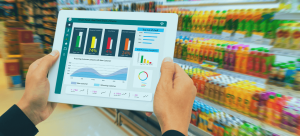
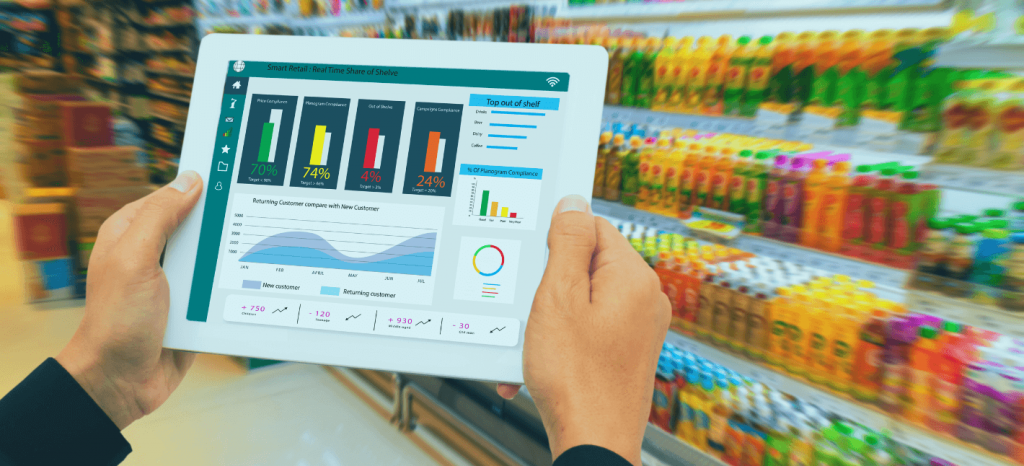
Smart shelves are retail shelves equipped with sensors or connected technologies that can help monitor products.
Depending on the system, smart shelves may detect when products are removed, identify low-stock situations, or provide information about product availability.
For example, if a particular product is running low, the system can send an alert to store employees.
This can reduce the need for employees to manually inspect every shelf throughout the day.
1. Real-Time Inventory Visibility
Inventory accuracy is one of the biggest challenges for retailers.
A product may appear available in a business system but actually be missing from the shelf.
Connected sensors and smart shelf technology can provide additional information about physical product availability.
When combined with POS and inventory management systems, IoT can help retailers develop a more complete view of their inventory.
2. Automatic Low-Stock Alerts
Retail employees cannot always monitor every shelf continuously.
Smart shelf systems can automatically identify potential low-stock situations.
For example, if the quantity of a product falls below a predefined level, the system can send an alert.
Employees can then restock the product before the shelf remains empty for an extended period.
This can help improve store operations and product availability.
3. Reducing Out-of-Stock Problems
Out-of-stock products can create a poor customer experience.
A customer may visit a store specifically to purchase a product and discover that it is unavailable.
IoT-enabled inventory monitoring can help retailers identify stock problems more quickly.
When connected with inventory forecasting systems, the data can also contribute to better replenishment planning.
4. Electronic Shelf Labels
Electronic shelf labels are another example of connected retail technology.
Instead of manually replacing paper price labels, retailers can update digital displays electronically.
When a price changes in the central retail system, the relevant shelf label can potentially be updated automatically, depending on the system.
This can reduce manual work and help maintain consistency between displayed prices and business systems.
5. Improving Store Operations
IoT technology can help retailers monitor different aspects of store operations.
Connected sensors can monitor equipment, environmental conditions, and other operational factors.
For example, temperature sensors can be useful in stores that sell products requiring controlled environments.
If a temperature moves outside an acceptable range, the system can send an alert to the appropriate staff.
6. Understanding Customer Movement
Some retailers use connected technologies to understand how customers move through physical stores.
This can provide insights into areas such as:
- Frequently visited sections
- Store traffic patterns
- Product display performance
- Queue areas
- Customer movement
These insights can help businesses evaluate store layouts and product placement.
Any technology used to collect information about individuals should be implemented with appropriate privacy considerations and according to applicable requirements.
7. IoT and AI Working Together
IoT devices generate large amounts of information.
AI and data analytics can help retailers interpret that information.
For example, IoT sensors may provide information about product availability while AI systems analyze sales patterns and demand.
Together, these technologies can support more informed inventory and operational decisions.
This combination is one reason why IoT is becoming increasingly relevant to modern retail technology strategies.
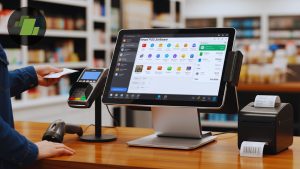
8. Smart Checkout Experiences
Connected technologies can also contribute to checkout improvements.
Retailers can use sensors, scanners, mobile devices, and digital payment systems to create faster checkout processes.
Some advanced retail environments use computer vision and other technologies to identify products and support automated checkout.
The exact implementation depends on the retailer’s business model and technology infrastructure.
9. Improving Supply Chain Visibility
IoT is not limited to the retail store.
Connected sensors can also be used throughout the supply chain.
Businesses may use IoT devices to monitor shipments, storage conditions, equipment, and inventory movement.
For example, connected temperature sensors can help monitor products that require specific storage conditions during transportation.
This can provide businesses with additional visibility into supply chain operations.
10. Predictive Maintenance
Retail stores depend on equipment such as refrigerators, air conditioning systems, payment terminals, and other devices.
Unexpected equipment failures can interrupt business operations.
IoT sensors can monitor equipment conditions and provide information that may help identify potential problems.
When combined with analytics, businesses can use this information to plan maintenance before a major failure occurs.
This approach is often referred to as predictive maintenance.
11. Energy Management
Retail stores consume energy through lighting, cooling, heating, refrigeration, and other equipment.
Connected sensors can help businesses monitor energy usage.
For example, smart systems can detect when certain areas of a store are occupied and adjust connected equipment according to predefined settings.
Energy monitoring can also help businesses identify unusual consumption patterns.
12. Smart Stores and Personalization
IoT can contribute to more connected customer experiences.
For example, a retailer’s mobile application may interact with in-store technologies to provide product information or relevant offers.
Businesses can potentially use location-based technologies to understand where customers interact with products.
However, personalization involving location or behavioral data requires careful consideration of privacy, consent, transparency, and applicable regulations.
Challenges of IoT in Retail
IoT adoption also creates technical and operational challenges.
Retailers may need to install and maintain large numbers of connected devices.
These devices need reliable connectivity, security, software updates, and monitoring.
Cybersecurity is particularly important because every connected device can potentially become part of a larger network.
Businesses should therefore maintain appropriate device management and security policies.
Cost Considerations
The cost of implementing IoT technology can vary significantly.
A small retailer may only need a few connected devices, while a large retail chain may require thousands of sensors across multiple locations.
Businesses should evaluate the expected operational benefits before investing in large-scale IoT infrastructure.
Starting with a specific problem, such as inventory monitoring or equipment management, can help retailers test the technology before expanding it.
The Future of Smart Retail Stores
The future retail store is likely to become increasingly connected.
IoT devices, AI, cloud computing, computer vision, digital payments, and analytics can work together to create smarter store environments.
Retailers may gain more real-time information about inventory, equipment, customer movement, and store operations.
At the same time, businesses will need to maintain strong cybersecurity and privacy practices as the number of connected devices increases.
Conclusion
IoT and smart shelf technology are changing how physical retail stores operate.
Connected devices can help businesses monitor inventory, identify low-stock products, update pricing, track equipment conditions, understand store activity, and improve operational efficiency.
When combined with AI and cloud-based systems, IoT can provide retailers with valuable real-time information that supports better decision-making.
However, successful IoT adoption requires careful planning, reliable connectivity, cybersecurity, privacy considerations, and clear business objectives.
As retail technology continues to evolve, connected stores will become an increasingly important part of the modern retail environment.