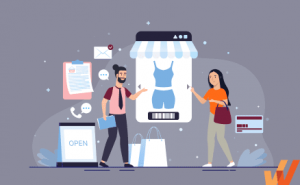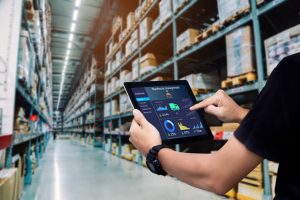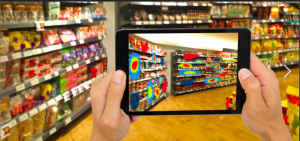
The retail industry is changing rapidly as technology becomes an important part of how businesses sell products, manage operations, communicate with customers, and make decisions.
Customers now expect convenient shopping experiences across websites, mobile devices, social platforms, and physical stores. At the same time, retailers need better tools to manage inventory, payments, customer data, employees, marketing, and supply chains.
Retail digital transformation is the process of using modern technology to improve these business processes and create more connected retail experiences.
It is not simply about purchasing new software. Successful digital transformation involves improving business processes, connecting systems, using data effectively, and creating better experiences for customers and employees.
What Is Retail Digital Transformation?
Retail digital transformation means using digital technologies to change and improve how a retail business operates.
It can involve technologies such as:
- Artificial intelligence
- Cloud computing
- Ecommerce platforms
- Mobile applications
- Data analytics
- Digital payments
- IoT devices
- Smart POS systems
- Automation
- Computer vision
- Customer relationship management
- Inventory management software
The specific technology a business needs depends on its size, products, customers, and business model.
Why Digital Transformation Matters
Traditional retail systems often operate separately.
A physical store may have one inventory system, an ecommerce website may have another, and customer information may be stored somewhere else.
This can create duplicate work and inconsistent information.
Digital transformation can connect these systems and create a more unified business environment.
For example, a customer could purchase a product online, receive a digital confirmation, track the delivery through a mobile device, and later return the product at a physical store.
1. Building a Strong Ecommerce Presence
For many retailers, ecommerce is one of the most important parts of digital transformation.
A modern ecommerce website should make it easy for customers to:
- Browse products
- Search for products
- View product information
- Compare options
- Add products to a cart
- Complete payments
- Track orders
- Request support
The website should also work effectively on mobile devices.
Retailers can gradually improve their ecommerce platforms by analyzing customer behavior and identifying areas where users experience difficulties.
2. Moving to Cloud-Based Systems
Cloud computing allows retailers to access software and business information through internet-connected systems.
Cloud-based platforms can support ecommerce, inventory management, accounting, customer relationship management, analytics, and collaboration.
One advantage is that businesses can access information from different locations without maintaining all infrastructure locally.
Cloud platforms can also make it easier to scale systems as business requirements change.
3. Using Data Analytics
Retailers generate large amounts of data every day.
This information can come from:
- Sales
- Ecommerce orders
- POS systems
- Customer interactions
- Inventory
- Marketing campaigns
- Website activity
- Product returns
Data analytics helps retailers turn this information into useful insights.
Businesses can analyze which products are selling, when demand changes, which marketing campaigns perform well, and where inventory problems exist.
4. Adopting Artificial Intelligence
Artificial intelligence is becoming an important part of retail technology.
AI can support:
- Product recommendations
- Customer service
- Demand forecasting
- Inventory planning
- Fraud detection
- Personalized marketing
- Product search
- Business analytics
AI should be implemented based on a clear business requirement rather than simply because it is a popular technology.
Businesses should also consider data quality, privacy, security, accuracy, and human oversight when using AI.
5. Creating Omnichannel Experiences
Customers may interact with a retailer through several channels.
They might discover a product on social media, research it on a website, visit a physical store, purchase it through a mobile device, and later contact customer support.
Omnichannel retail connects these interactions.
A connected retail system can help businesses maintain consistent product information, inventory visibility, customer service, and order information across different channels.
6. Modernizing POS Systems
Traditional cash registers are increasingly being replaced or supplemented by smart POS systems.
Modern POS platforms can manage:
- Sales
- Payments
- Inventory
- Customer information
- Discounts
- Loyalty programs
- Receipts
- Reports
When the POS system is connected with ecommerce and inventory platforms, retailers can obtain a more complete view of their business.
7. Improving Inventory Management
Inventory is one of the most important areas for retail digital transformation.
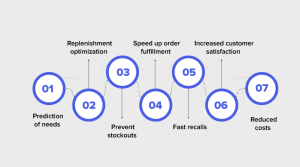
Technology can provide real-time information about available stock and help businesses identify low-stock products.
Data analytics can also help retailers understand fast-moving and slow-moving products.
AI-powered forecasting may support purchasing decisions by analyzing historical sales and other relevant information.
Better inventory visibility can help retailers reduce unnecessary stock while maintaining product availability.
8. Modernizing Digital Payments
Digital payments have become an important part of retail.
Retailers can provide customers with different payment options, including cards, mobile wallets, QR payments, and online payment gateways.
Payment systems can also be connected with ecommerce and POS platforms.
A modern payment infrastructure should focus on convenience, reliability, security, and appropriate data protection.
9. Using Automation
Automation can reduce repetitive manual work.
Retail businesses can automate tasks such as:
- Inventory updates
- Order processing
- Customer notifications
- Marketing emails
- Reporting
- Low-stock alerts
- Shipping updates
- Customer support
Automation allows employees to spend more time on activities that require human judgment and customer interaction.
10. Improving Customer Experience
Digital transformation should ultimately create value for customers.
Technology can make shopping easier by providing:
- Faster search
- Better product recommendations
- Multiple payment methods
- Easy order tracking
- Personalized communication
- Faster customer support
- Flexible delivery options
- Online and offline shopping connections
Retailers should evaluate technology based on whether it actually improves the customer journey.
11. Connecting Customer Data
Customer relationship management systems can help retailers organize customer interactions and purchase information.
When appropriate and legally permitted, businesses can use customer information to provide more relevant communication and service.
For example, a retailer may use purchase history to provide relevant product recommendations or loyalty benefits.
Businesses must ensure that customer information is collected, stored, and used responsibly.
12. Improving Retail Security
As retailers become more digital, cybersecurity becomes increasingly important.
Businesses need to protect ecommerce websites, payment systems, customer accounts, employee accounts, and internal business information.
Important practices include:
- Strong passwords
- Multi-factor authentication
- Regular software updates
- Secure payment systems
- Employee security training
- Data backups
- Access controls
- Security monitoring
Security should be included from the beginning of a digital transformation project.
13. Using IoT in Retail
Internet of Things devices can connect physical retail equipment to digital systems.
Retailers can use IoT technologies for applications such as:
- Smart shelves
- Inventory monitoring
- Equipment monitoring
- Store environmental controls
- Warehouse tracking
- Energy management
IoT can provide additional operational data and help businesses monitor physical environments more efficiently.
14. Digital Transformation for Small Retailers
Digital transformation is not limited to large retail companies.
Small businesses can begin with simple improvements.
For example, a small retailer could start by creating an ecommerce website, adopting a digital POS system, using cloud-based accounting, setting up digital payments, and maintaining accurate inventory records.
Once these systems are established, the business can gradually add automation, analytics, CRM, and AI-powered tools.
Starting with practical problems is often more useful than attempting to adopt every new technology at once.
Challenges of Retail Digital Transformation
Digital transformation can create challenges for businesses.
The main challenges may include technology costs, system integration, employee training, data migration, cybersecurity, privacy, and resistance to process changes.
Legacy systems can also make integration more complicated.
Retailers should therefore create a clear roadmap before starting a major transformation project.
The roadmap should identify current problems, business objectives, required technologies, budget considerations, implementation stages, and measurable outcomes.
How to Start a Retail Digital Transformation Project
A practical approach can include several stages.
Step 1: Identify Business Problems
Determine where the current business process is inefficient.
Step 2: Review Existing Technology
Identify which systems are already working and which require improvement.
Step 3: Set Clear Objectives
Define what the business wants to achieve, such as better inventory visibility or faster order processing.
Step 4: Choose Appropriate Technology
Select tools based on actual business requirements rather than trends alone.
Step 5: Integrate Systems
Connect ecommerce, POS, inventory, payments, CRM, and other relevant platforms where appropriate.
Step 6: Train Employees
Employees should understand how new systems work and how they affect daily processes.
Step 7: Monitor Results
Use business data and customer feedback to measure whether the transformation is delivering the intended improvements.
The Future of Retail Digital Transformation
Retail technology will continue to evolve as AI, automation, cloud computing, mobile commerce, IoT, data analytics, and connected platforms become more integrated.
Future retail environments may provide increasingly personalized shopping experiences while automating more operational tasks behind the scenes.
Physical stores and digital commerce are also likely to become more closely connected.
However, technology will remain only one part of the transformation process. Businesses will also need effective processes, skilled employees, reliable data, strong security practices, and a clear understanding of customer needs.
Conclusion
Retail digital transformation is about more than adopting new technology. It is about using technology to create better business processes and more connected customer experiences.
From ecommerce and cloud computing to AI, analytics, digital payments, automation, smart POS systems, and IoT, retailers have many tools available to modernize their operations.
Businesses do not need to transform everything at once. A practical approach is to identify the most important business problems, implement suitable technology, connect systems gradually, and continuously measure the results.
For retailers preparing for the future, digital transformation can provide a framework for building more connected, efficient, and technology-driven operations while keeping customer experience at the center of the business strategy.